Robert E. Lee Quotes
I can anticipate no greater calamity for the nation than the dissolution of the Union.
Robert E. Lee, 1807-1870, Confederate General-in-Chief, Quoted on PBS The Civil War, September 23, 1990
Sourced by: Eigen's Political and Historical Quotations

Fortunately he was wrong, but the threat of a breakup of the American Union intimidated most members of Congress to avoid anything that would offend a state or group of states. Thus slavery became more and more entrenched till it exploded into the Civil War. At the time the issues of contention included the fact that Louisiana was primarily Roman Catholic and ALL other states were majority Protestant. The territory functioned under French Law—the Napoleonic Code, while all the other states operated under the English Common Law (even today this is so), and there was concern with the French and Creole language and whether the Creoles would fit into American Culture.

In many respects, it is amazing that secession did not take place earlier.


It would be almost 30 years until Jackson would have been proved correct and the Civil War had begun.

This was more than 15 years before South Carolina became the first state to secede from the Union. The idea of secession existed long before Abraham Lincoln was elected to the Presidency.

At the time his Vice President, John C. Calhoun, was expounding a theory of “nullification” by which the states could supersede and nullify federal law in their states. When Jackson finished his toast, it was Calhoun’s turn (See {635896}.) His toast supported the States’ Rights position over the federal government. In those days Presidents and Vice President’s were often political enemies or of opposite parties. The President’s advisors thought that his toast might be misinterpreted. So when they gave the toast to the press as “The Federal Union: It must be preserved.” That was the form in which the press reported the President’s toast and for many years that was the version most quoted even though it was never delivered that way. However Jackson was responsible for both versions.


Crittendon, at the outbreak of the Civil War, had a Governor who wanted Kentucky to secede and join the Confederacy, but he and other leaders thwarted that and the state legislatures defied the governor and forced him to resign. 16 percent of Kentucky men held slaves and keeping Kentucky and Maryland in the Union was a very high priority for President Lincoln. See {633812}.


There was an active secession movement by the Western States. New Orleans was then controlled by the Spanish who would not allow U.S. goods access to export from New Orleans. Some of the wealthier Western citizens thought that they would fare better as a vassal state of Spain rather than part of the newly formed United States. Jefferson, did not overreact and the movement for secession faded.


This quotation is fascinating and illustrates the depth and complexity of the problem facing Abraham Lincoln. Howell actually used the word “evil” to describe the abolitionists and their political efforts end slavery. He and other slave holders did not see slavery and the murder, brutality, and torture that went with it as evil. After the Presidential years of James Buchanan who protected the South from slavery reform and abolition as the North was gaining political power and the abolitionists were having a greater and greater effect on public opinion in the North. While Southerners did not believe Lincoln would emancipate the slaves, they realized that the majority of the growing nation was opposed to slavery, and more and more Northern states were passing laws making any slave who sets foot in the State a free person. Slaves could not only have more reason to run away, but slave owners would not be able to get their “property” back. Lincoln would not help the South as Buchanan did, and the Southerners realized that over time, slavery would no longer be feasible or profitable. Cobb, very experienced at Washington politics, realized the changes that would come and thought that they would be “certain and speedy.”—see {620555}. Lincoln had been elected a month earlier and without Buchanan as President to protect the institution of slavery, the anti-slavery majority of the country would prevail unless the South seceded. Cobb was one of the strong advocates. 6 days later, the Georgia legislature called for a convention to debate secession. The irony was that if the South had not seceded and simply dragged its feet legislatively, it would have taken two or three decades for slavery to end. However, by seceding and initially fighting so hard and well while weak Union generals were in command, Lincoln was forced to try more drastic measures and issued the Emancipation Proclamation after only a few years. The Civil War and secession was not only a tactical and strategic error for the South, but rapidly brought about just what the Southerners were fighting to prevent.


This quotation is very important in that this is the first record that Lincoln had any doubts that he might not be able to preserve the Union.
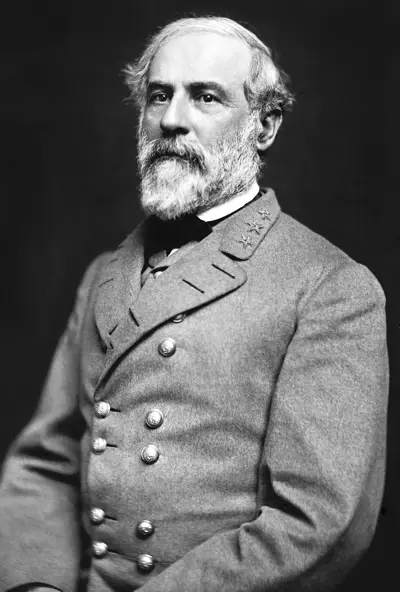
Robert Edward Lee was an American Confederate general best known as a commander of the Confederate States Army during the American Civil War. He led the Army of Northern Virginia from 1862 until its surrender in 1865 and earned a reputation as a skilled tactician.
