British East India Company Quotes
No boy shall be refused admission to a Government school or college on ground of caste.
The “company actially administered the Government of Great Britain in India.
British East India Company, Directive, 1854
Sourced by: Eigen's Political and Historical Quotations


He saw great similarities between the terrible Indian Caste system and the different socio-economic classes of the West. Brahmins are the high caste Indians and the Sudras are low caste.


The traditional Hindu social structure established castes – levels of society with Brahmins at the top and untouchables at the bottom. When India gained independence, the caste system was made illegal. Nonetheless, it is still followed by hundreds of millions of Indians. Religiously the Buddhists and the Hindus have had different philosophies. Ilaiah is a Buddhist who opposes the traditional Brahmin social structure and is a supporter of “Dalitization” – a change in the Indian culture to make the Dalits (untouchables) equal de juro and de facto.

Gahdhi’s early career was in South Africa. What makes this quotation very interesting is that it shows Ghandi---one of the great disciples of brotherhood and equality of all men---had a period when he was outraged that Indians would have Blacks (Kaffirs) located in their neighborhood. It illustrates the personal transition that he made from prejudiced, parochial advocate for a particular ethnic group to an advocate and spokesman for all mankind.


to have separate schools for Blacks

They were the “untouchables”. Under English rule and law, they had more opportunity, equality and protection than ever before. They opposed the idea of home rule and passing rule to an Indian parliament and ministers as ol the upper castes would dominate and control the government and would discriminate against them as they had always done before English rule. What they worried about came of to pass, but the Congress Party which dominated much of Indian politics was opposed to the Caste system and went out of their way to make it illegal and to institute affirmative action. However, regardless of the law, the Cast System still exists, and the discrimination is a current problem for India and the untouchables.
The editor at the time was Dr. William H. Boyle but no one is sure whether he, the owner, or someone else, wrote the editorial. The quotation illustrated a fascinating twist of logic that was very commonly held at the time. “If God created men of different colors, he must have meant them to be separate.” It is fascinating that virtually no one at the time made a similar argument about hair or eye color, intellect or other differential traits of people. Although this logical fallacy waned in the latter part of the 20th century, there are some who still hold to it.

In 1877 Wasburn was dropped from the List of Ministers by the Unitarian Church. He had become quite atheistic.


Islamic modernists like him are many among the educated Muslims but their views are often drowned out by the violence and extremist statements of the fundamentalists.


It was not until this publication that people who suggested that discrimination and lack of education and opportunity might have something to do with the problem Blacks faced in society were regarded by many Americans as anything but left wing intellectuals.

Although technically illegal, India has a caste system where Brahmins are on the top and the “untouchables” are at the bottom. Discrimination exists throughout society except in some government programs.
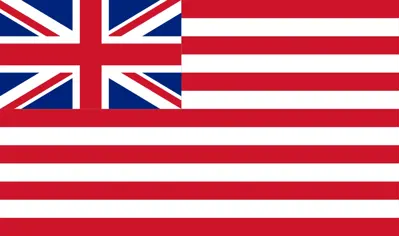
The East India Company (EIC), also known as the Honourable East India Company (HEIC), East India Trading Company (EITC), the English East India Company or (after 1707) the British East India Company, and informally known as John Company, Company Bahadur, or simply The Company was an English and later British joint-stock company founded in 1600. It was formed to trade in the Indian Ocean region, initially with the East Indies (the Indian subcontinent and Southeast Asia), and later with Qing China. The company seized control of large parts of the Indian subcontinent, colonised parts of Southeast Asia and Hong Kong after the First Opium War, and maintained trading posts and colonies in the Persian Gulf Residencies.
