Keshub Chunder Sen Quotes
I was also pained to notice an institution which I certainly did not expect to find in this country – I mean caste. Your rich people are really Brahmins, and your poor people are Sudras.
He saw great similarities between the terrible Indian Caste system and the different socio-economic classes of the West. Brahmins are the high caste Indians and the Sudras are low caste.
Keshub Chunder Sen, 1838-1888, Indian religious and social reformer, Speech at Hannover Square Rooms, England, September 12, 1870
Sourced by: Eigen's Political and Historical Quotations

This novel won the Booker Prize—one of the great achievements in literature.


Many Indians follow a rigid caste system where all people are born and divided into 5 social castes which are immutable—there is no caste mobility. An “untouchable” –the lowest Indian Caste—even if he make a million dollars—is still an untouchable and the higher casts would have nothing to do with him. Most upper caste people would not allow an untouchable physician to treat him or an untouchable cook to prepare his food. The Caste system is illegal under Indian law, but the majority of the Indians still follow it.


1st Earl of Beaconsfield. See Thomas Jefferson for a similar view.


Paz was the Ambassador to India


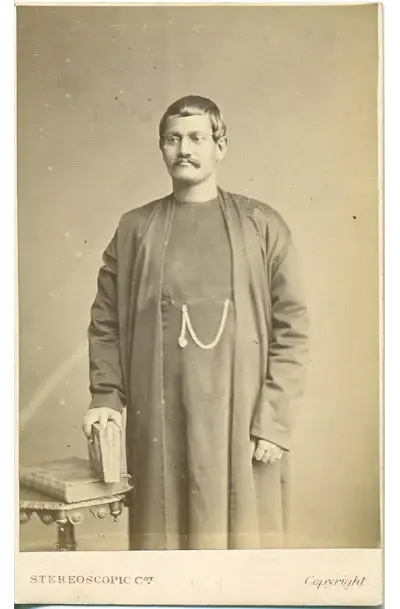
Keshub Chandra Sen was a Hindu philosopher and social reformer who attempted to incorporate Christian theology within the framework of Hindu thought. Born a Hindu in the Bengal Presidency of British India, he became a member of the Brahmo Samaj in 1857 but established his own breakaway "Bharatvarshiya Brahmo Samaj" in 1866 while the Brahmo Samaj remained under the leadership of Debendranath Tagore (who headed the Brahmo Samaj till his death in 1905). In 1878 his followers abandoned him after the underage child marriage of his daughter which exposed his campaign against child marriage as hollow. Later in his life he came under the influence of Ramakrishna and founded a syncretic "New Dispensation" inspired by Christianity, and Vaishnav bhakti, and Hindu practices.
