Vilfredo Pareto Quotes
The class struggle, to which Marx has specially drawn attention, is a real factor, the tokens of which are to be found on every page of history. But the struggle is not confined only to two classes: the proletariat and the capitalist; it occurs between an infinite number of groups with different interests, and above all between the elites contending for power. The existence of these groups may vary in duration, they may be based on permanent or more or less temporary characteristics. In the most savage peoples, and perhaps in all, sex determines two of these groups.
Vilfredo Pareto, 1848-1923, Italian sociologist, economist and philosopher, Les Systemes Socialistes, 1902
Sourced by: Eigen's Political and Historical Quotations


Salisbury was a brilliant, effective prime minister, but he was a snob and not a democrat. See {639131}.


This was the prevailing view in Europe at the time; it was less so in the United States, where there were so many people who owned their own land and farmed it or developed manufacturing facilities and hence were the mind AND the limbs of the enterprises. However, the upper classes tended to agree with the European view. The difference between the American and European views was one of class mobility. In America “limbs” who demonstrated capacities of “mind” were much more able to advance in America. However, even into the 21st century here was a general feeling of the upper class that the “minds” made the critical and impactful decisions. This is one of the reasons that executive and CEO pay advanced so rapidly when compared with workers (the “linbs”).

He saw great similarities between the terrible Indian Caste system and the different socio-economic classes of the West. Brahmins are the high caste Indians and the Sudras are low caste.


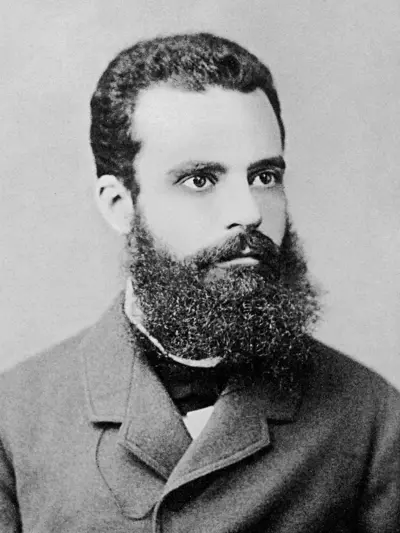
Vilfredo Federico Damaso Pareto was an Italian civil engineer, sociologist, economist, political scientist, and philosopher. He made several important contributions to economics, particularly in the study of income distribution and in the analysis of individuals' choices. He was also responsible for popularising the use of the term "elite" in social analysis.
