Johann Gottlieb Fichte Quotes
The higher classes constitute the mind of the single large whole of humanity; the lower classes constitute its limbs;
This was the prevailing view in Europe at the time; it was less so in the United States, where there were so many people who owned their own land and farmed it or developed manufacturing facilities and hence were the mind AND the limbs of the enterprises. However, the upper classes tended to agree with the European view. The difference between the American and European views was one of class mobility. In America “limbs” who demonstrated capacities of “mind” were much more able to advance in America. However, even into the 21st century here was a general feeling of the upper class that the “minds” made the critical and impactful decisions. This is one of the reasons that executive and CEO pay advanced so rapidly when compared with workers (the “linbs”).
Johann Gottlieb Fichte, 1762 1814, German Philosopher and Reformer, The System of Ethics According to the Principles of the Wissenschaftslehre, 1798
Sourced by: Eigen's Political and Historical Quotations


Most pressure for political correctness comes from the center or the left. On this area however, pressure to avoid speaking of this comes from left and right. The left is concerned that by discussing the reality the poorer performing subgroups will be stigmatized and public behavior will make the situation worse. The right would prefer that there is little or no political dialogue regarding the huge differences in outcome in America where individual ability and effort seems to play such a large part of the differential. I addition, they see the making of these distinctions as the beginning of class warfare.


Salisbury was a brilliant, effective prime minister, but he was a snob and not a democrat. See {639131}.

Describing the annual conference in Davos, Switzerland where the very wealthy of the world gather and discuss mutual concerns.


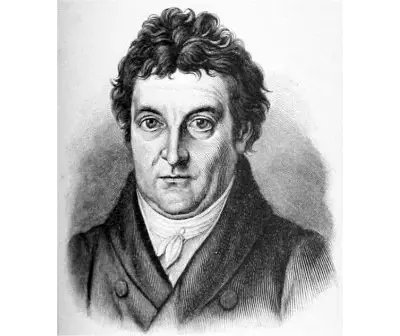
Johann Gottlieb Fichte was a German philosopher who became a founding figure of the philosophical movement known as German idealism, which developed from the theoretical and ethical writings of Immanuel Kant. Recently, philosophers and scholars have begun to appreciate Fichte as an important philosopher in his own right due to his original insights into the nature of self-consciousness or self-awareness. Fichte was also the originator of thesis–antithesis–synthesis, an idea that is often erroneously attributed to Hegel. Like Descartes and Kant before him, Fichte was motivated by the problem of subjectivity and consciousness. Fichte also wrote works of political philosophy; he has a reputation as one of the fathers of German nationalism.
