Matthew Arnold Quotes
Choose equality …. Inequality has the natural and necessary effect … of materializing our upper class, vulgarizing our middle class, and brutalizing our lower class.
Matthew Arnold, 1882-1888, English Poet and Critic, Mixed Essays, Equality, 1879
Sourced by: Eigen's Political and Historical Quotations


This was the prevailing view in Europe at the time; it was less so in the United States, where there were so many people who owned their own land and farmed it or developed manufacturing facilities and hence were the mind AND the limbs of the enterprises. However, the upper classes tended to agree with the European view. The difference between the American and European views was one of class mobility. In America “limbs” who demonstrated capacities of “mind” were much more able to advance in America. However, even into the 21st century here was a general feeling of the upper class that the “minds” made the critical and impactful decisions. This is one of the reasons that executive and CEO pay advanced so rapidly when compared with workers (the “linbs”).


Worry about the disproportional power of the rich is not a modern concern, but was a concern from the very beginning of the nation. There was a belief that if there were a legislative body representing the entire population the rich would tend to dominate it. The solution that England had found was a bicameral Parliament—a House of Lords representing the wealthy and the powerful and the House of Commons, representing the bulk of the people. America followed suit but never did have the class distinction of England.


By 2015, the income inequality had gotten so bad that even billionaires were expressing alarm.
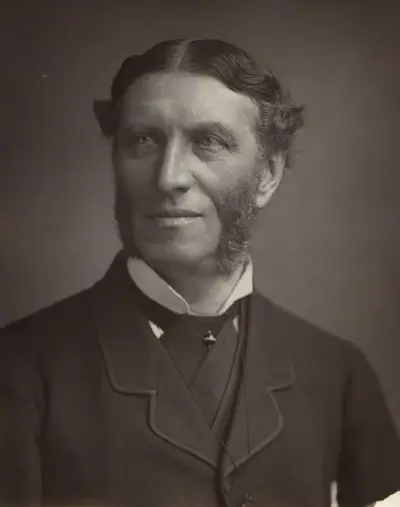
Matthew Arnold was an English poet and cultural critic who worked as an inspector of schools. He was the son of Thomas Arnold, the celebrated headmaster of Rugby School, and brother to both Tom Arnold, literary professor, and William Delafield Arnold, novelist and colonial administrator. Matthew Arnold has been characterised as a sage writer, a type of writer who chastises and instructs the reader on contemporary social issues. He was also an inspector of schools for thirty-five years, and supported the concept of state-regulated secondary education.
