Bertrand Russell Quotes
Among human beings, the subjection of women is much more complete at a certain level of civilization than it is among savages. And the subjection is always reinforced by morality.
3rd Earl Russell of Kingston
Bertrand Russell, 1872-1970, British Philosopher & Reformer, Power: A New Social Analysis, 1938
Sourced by: Eigen's Political and Historical Quotations


Billinghurst was physically handicapped without the use of her legs. She protested and marched in protest parades using a hand propelled tricycle which the police sometimes dumped her out of and left her immobile in alleys.

This view is very similar to that of some of the religious fundamentalists in America who would oppose most of the other Nazi doctrines.


Marcus Porcius Cato. This quotation has had two different interpretations over time. One was that women if they received equality of treatment and voting would have an advantage for they also had their traditional “feminine wiles” and their sexuality, hence would dominate men. The second was a also a warning but based on the fact that women were superior in many ways, and given an equal chance, would excel men. The later interpretation is argued by some who point to the 2011 American data that shows more females than males graduating from high school and college, and females outnumber males in medical, law and several other professional schools. With the exception of a few Roman men, most heeded Cato’s warning and never took a chance on female equality.


In Bedouin society women may not own land or cattle.


The Greek culture was quite sexist. However, all cultures had observed strong women, some who ruled and others where wives or mistresses of rulers were very influential if not powerful.
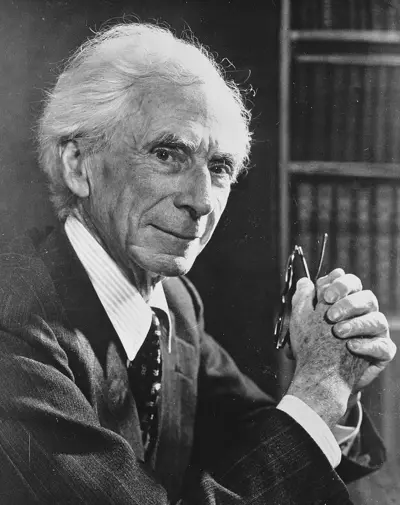
Bertrand Arthur William Russell, 3rd Earl Russell OM FRS was a British polymath, philosopher, logician, mathematician, historian, writer, social critic, political activist, and Nobel laureate. Bertrand Russell was one of the most influential and widely known intellectual figures of the twentieth century. In 1950 he was awarded the Nobel Prize in Literature for his extensive contributions to world literature and for his “rationality and humanity, as a fearless champion of free speech and free thought in the West.“
