Vilfredo Pareto Quotes
Among civilized peoples, especially the very wealthy population of the United States of America, women have become objects of luxury who consume but do not produce.
Vilfredo Pareto, 1848-1923, Italian sociologist, economist and philosopher, Manual of Political Economy
Sourced by: Eigen's Political and Historical Quotations


This question he asked of an interviewee was at the time not even considered offensive of patronizing and women and men who advocated careers for women would try to explain that women could do both. Very few would counter with the point that what about men and their “neglect” of family life or the reality that through the entire Second World War MILLIONS of women were working. This quotation illustrated the culture change in the years since then.

Prevented by the Military from ever taking office

During the Civil War, the government produced paper money for the first time. The clerks in the Treasury had to cut the printed money to size and separate the several bills on a sheet. However, with more work and men needed for the war effort, Spinner came up with the good idea of using women as Treasury Department Clerks. Chase, one of Lincoln’s rivals for the Presidency, was the Secretary of the Treasury and although not enthused allowed Spinner to allow some women into the Federal Workforce. See {629786} for one reaction.

She was 1 of the 4 women who entered Oberlin College in 1837 thus becoming the first co-educational institution of higher education in the United States.

This quotation illustrates what a misogynist Limbaugh was. An Italian “study” claimed that there was a difference in penis size. The study was never replicated and the results are very doubtful. However, the notion that the cause and responsibility for male sexual size shrinkage is feminism is so physiologically absurd that his irrationality over gender issues becomes clear.


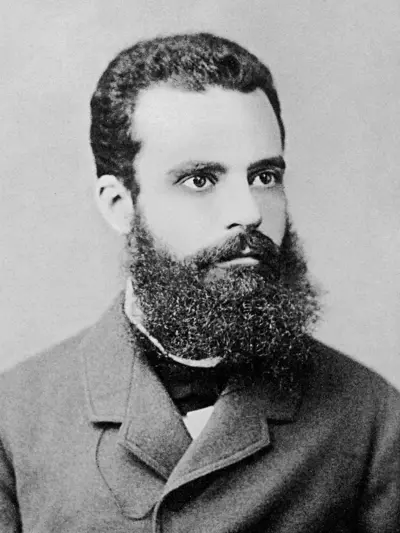
Vilfredo Federico Damaso Pareto was an Italian civil engineer, sociologist, economist, political scientist, and philosopher. He made several important contributions to economics, particularly in the study of income distribution and in the analysis of individuals' choices. He was also responsible for popularising the use of the term "elite" in social analysis.
