Harriet Martineau Quotes
If a test of civilization be sought, none can be so sure as the condition of the half of society over which the other half has power—from the exercises of the right of the strongest.
Harriet Martineau, 1802-1876, British Economist & Reformer, Society in America, 1837
Sourced by: Eigen's Political and Historical Quotations


She was one of the first prominent white Southerners to denounce racial segregation. However, her view was the “equality” argument just made the Southern whites more recalcitrant. Many white Southerners were willing to end segregation as it was un Christian and unfair, but were not willing to give up the image that they were superior. Others argued that unless they did give up the notion, segregation could never be ended.


Marcus Porcius Cato. This quotation has had two different interpretations over time. One was that women if they received equality of treatment and voting would have an advantage for they also had their traditional “feminine wiles” and their sexuality, hence would dominate men. The second was a also a warning but based on the fact that women were superior in many ways, and given an equal chance, would excel men. The later interpretation is argued by some who point to the 2011 American data that shows more females than males graduating from high school and college, and females outnumber males in medical, law and several other professional schools. With the exception of a few Roman men, most heeded Cato’s warning and never took a chance on female equality.


He was writing about America and many of the industrial democracies who at the time, as a result of globalziation, technology, government action and inaction, and other factors, had gone through a 30 year period of increasing disparities.


In one of the earliest claims that women should be allowed to preach, she made a theological argument and then challenged the male theologians to better her arguments. Although she was very demur, intellectually and theologically she “took it right at them.” Such intellectual aggression by women was virtually unheard of.


In the Nez Perce and most other Native American societies, there were Chiefs and occasionally, for special circumstances, War Chiefs, but few if any other officials, thus producing a very flat, egalitarian society. But the whites had many layers of bureaucrats and petty officials. Governors, The President, Members of Congress, State Legislators, Generals, Sheriffs, Indian Agents, tax collectors, and the like. On the Papago Indian reservation, there was great difficulty on a construction project as even the concept of a work foreman was an uncomfortable notion. No Papago wanted to be directed or ordered about by anyone else even on a work gang. And do no one wanted to assume a position of authority or be responsive to a fellow other than the Chief and the tribal elders.


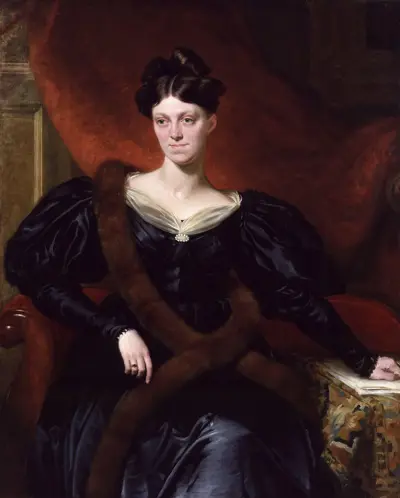
Harriet Martineau was an English social theorist and Whig writer often seen as the first female sociologist. She wrote many books and essays from a sociological, holistic, religious, domestic and feminine perspective, translated works by Auguste Comte, and earned enough to support herself by writing, a rare feat for a woman of her period. The young Princess Victoria enjoyed reading her and invited her to her coronation in 1838. Martineau said of her approach, "One must focus on all [society's] aspects, including key political, religious, and social institutions." She believed thorough analysis was needed to understand women's status under men. The novelist Margaret Oliphant said "as a born lecturer and politician... less distinctively affected by her sex than perhaps any other, male or female, of her generation."
