Georg Lukacs Quotes
The division of society into estates or castes means in effect that conceptually and organizationally these ‘natural’ forms are established without their economic basis ever becoming conscious
Georg Lukacs, 1885-1971, Hungarian Political Philosopher, Class Consciousness, 1920
Sourced by: Eigen's Political and Historical Quotations


Hammond’s rhetorical tactic was to then argue that it was better to have Blacks be the lower class than whites—hence slavery was a logical conclusion.


This was the prevailing view in Europe at the time; it was less so in the United States, where there were so many people who owned their own land and farmed it or developed manufacturing facilities and hence were the mind AND the limbs of the enterprises. However, the upper classes tended to agree with the European view. The difference between the American and European views was one of class mobility. In America “limbs” who demonstrated capacities of “mind” were much more able to advance in America. However, even into the 21st century here was a general feeling of the upper class that the “minds” made the critical and impactful decisions. This is one of the reasons that executive and CEO pay advanced so rapidly when compared with workers (the “linbs”).


He saw great similarities between the terrible Indian Caste system and the different socio-economic classes of the West. Brahmins are the high caste Indians and the Sudras are low caste.


In 1877 Wasburn was dropped from the List of Ministers by the Unitarian Church. He had become quite atheistic.


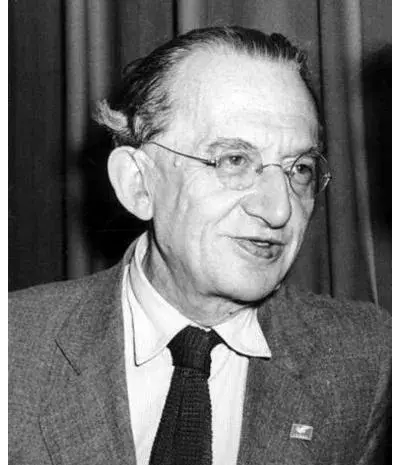
György Lukács was a Hungarian Marxist philosopher, literary historian, critic, and aesthetician of Jewish heritage. He was one of the founders of Western Marxism, an interpretive tradition that departed from the Marxist ideological orthodoxy of the Soviet Union. He developed the theory of reification, and contributed to Marxist theory with developments of Karl Marx's theory of class consciousness. He was also a philosopher of Leninism. He ideologically developed and organised Lenin's pragmatic revolutionary practices into the formal philosophy of vanguard-party revolution.
