Barbara Ehrenreich Quotes
If you have more rich people and more poor people and fewer people in the middle, what you lose is democracy.
Barbara Ehrenreich, Economist and Columnist, PBS Listening to America, May 12, 1992
Sourced by: Eigen's Political and Historical Quotations

The crisis of inequality of income and wealth has occurred seven times in American history.


At the time English democracy was still suspect especially among the aristocracy.


Chesterton preceded by almost half a century much of the intellectual dispute of the War on Poverty of the 1960’s where much of the middle and upper class tried to change a variety of behavior patterns and customs and values of the poor.


Worry about the disproportional power of the rich is not a modern concern, but was a concern from the very beginning of the nation. There was a belief that if there were a legislative body representing the entire population the rich would tend to dominate it. The solution that England had found was a bicameral Parliament—a House of Lords representing the wealthy and the powerful and the House of Commons, representing the bulk of the people. America followed suit but never did have the class distinction of England.


He saw great similarities between the terrible Indian Caste system and the different socio-economic classes of the West. Brahmins are the high caste Indians and the Sudras are low caste.


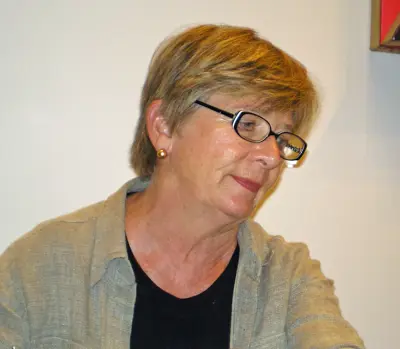
Barbara Ehrenreich is an American author and political activist who describes herself as "a myth buster by trade" and has been called "a veteran muckraker" by The New Yorker. During the 1980s and early 1990s she was a prominent figure in the Democratic Socialists of America. She is a widely read and award-winning columnist and essayist, and author of 21 books. Ehrenreich is perhaps best known for her 2001 book Nickel and Dimed: On (Not) Getting By in America. A memoir of Ehrenreich's three-month experiment surviving on minimum wage as a waitress, hotel maid, house cleaner, nursing-home aide, and Wal-Mart clerk, it was described by Newsweek magazine as "jarring" and "full of riveting grit," and by The New Yorker as an "exposé" putting "human flesh on the bones of such abstractions as 'living wage' and 'affordable housing'." She is a recipient of a Lannan Literary Award.
