Kancha Ilaiah Quotes
Brahmins do not have the right to call themselves Indians … If India has to become a modern nation, … It has to establish an egalitarian relationship between Brahmins and the lower castes.
The traditional Hindu social structure established castes – levels of society with Brahmins at the top and untouchables at the bottom. When India gained independence, the caste system was made illegal. Nonetheless, it is still followed by hundreds of millions of Indians. Religiously the Buddhists and the Hindus have had different philosophies. Ilaiah is a Buddhist who opposes the traditional Brahmin social structure and is a supporter of “Dalitization” – a change in the Indian culture to make the Dalits (untouchables) equal de juro and de facto.
Kancha Ilaiah, Indian Philosopher, Political Scientist and Writer, Rediff Interview, January 17, 2000
Sourced by: Eigen's Political and Historical Quotations


Although technically illegal, India has a caste system where Brahmins are on the top and the “untouchables” are at the bottom. Discrimination exists throughout society except in some government programs.

Many Indians follow a rigid caste system where all people are born and divided into 5 social castes which are immutable—there is no caste mobility. An “untouchable” –the lowest Indian Caste—even if he make a million dollars—is still an untouchable and the higher casts would have nothing to do with him. Most upper caste people would not allow an untouchable physician to treat him or an untouchable cook to prepare his food. The Caste system is illegal under Indian law, but the majority of the Indians still follow it.


Paz was the Ambassador to India. The caste system in India was outlawed by the Indian Constitution, and the government has made many effort at affirmative action to eliminate it put as Paz observed it is so ingrained in Indian tradition, culture and religion that it continues to persist.


Manava Dharma Shastra. The caste system in action. Note however that the highest caste aristocrats could not abuse even lower caste women with impunity the way that was common in early Christian Europe. However, the punishment was not death as required by Muslim law—see {590409}. This text is a part of the Hindu Holy Texts. Hindus believe that Manu was a prophet whose text is revealed or inspired.


In 1877 Wasburn was dropped from the List of Ministers by the Unitarian Church. He had become quite atheistic.


He saw great similarities between the terrible Indian Caste system and the different socio-economic classes of the West. Brahmins are the high caste Indians and the Sudras are low caste.

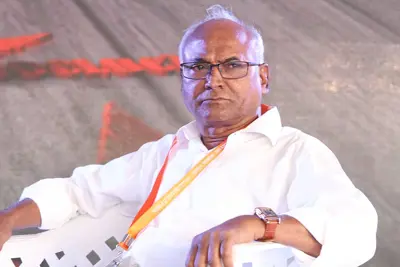
Kancha Ilaiah is an Indian political theorist, prolific writer and a Dalit rights activist. He writes in both English and Telugu. His main domain of study and activism is the annihilation of caste. He also refers to himself symbolically as Kancha Ilaiah Shephard.
