Manu Quotes
A Brahmana shall be compelled to pay a fine of one thousand panas if he has intercourse with … females of those two lower castes; for offending with a … Sudra female a fine of one thousand.
Manava Dharma Shastra. The caste system in action. Note however that the highest caste aristocrats could not abuse even lower caste women with impunity the way that was common in early Christian Europe. However, the punishment was not death as required by Muslim law—see {590409}. This text is a part of the Hindu Holy Texts. Hindus believe that Manu was a prophet whose text is revealed or inspired.
Manu, ~ 500 BC, Hindu Teacher from India, Laws of Manu
Sourced by: Eigen's Political and Historical Quotations

Manava Dharma Shastra. The Brahmana or Bramin is a member of the highest caste. Even in European Aristocratic societies, Aristocrats never had the degree of privilege that Indian religion, law and custom provided. Some of this socially exists today. This text is a part of the Hindu Holy Texts. Hindus believe that Manu was a prophet whose text is revealed or inspired.
Manava Dharma Shastra. The Hindus believe in reincarnation and that the souls of animals move up the ladder and if they are good are eventually born as humans (Sudras). These are the lowest caste in this terribly discriminatory system—the “untouchables.” But if a Sudra lives a pious life and accepts his lot, he is reincarnated as a higher cast human (twice born). This law illustrates the incredible discrimination that the cast system produced. In modern India, the caste system is illegal and there is no discrimination in law or by government. However it is still terribly evident in social life, marriage, employment and most phases of Indian society. This text is a part of the Hindu Holy Texts. Hindus believe that Manu was a prophet whose text is revealed or inspired.

Paz was the Ambassador to India. The caste system in India was outlawed by the Indian Constitution, and the government has made many effort at affirmative action to eliminate it put as Paz observed it is so ingrained in Indian tradition, culture and religion that it continues to persist.

The Caste System has been legally abolished in India yet hundreds of million Indians still follow it.

The traditional Hindu social structure established castes – levels of society with Brahmins at the top and untouchables at the bottom. When India gained independence, the caste system was made illegal. Nonetheless, it is still followed by hundreds of millions of Indians. Religiously the Buddhists and the Hindus have had different philosophies. Ilaiah is a Buddhist who opposes the traditional Brahmin social structure and is a supporter of “Dalitization” – a change in the Indian culture to make the Dalits (untouchables) equal de juro and de facto.
Manava Dharma Shastra. In the Hindu caste system, the highest caste was allowed to vigilante justice while the other castes had to go through the king and his magistrates. This text is a part of the Hindu Holy Texts. Hindus believe that Manu was a prophet whose text is revealed or inspired.
Manava Dharma Shastra. This quotation shows that even thought the Ancient Hindu king was an autocrat, even he had to live within the law, and if he transgressed his fine was one thousand times the fin of a commoner. It is not clear whether or not this principle was actually imposed and when. But unlike the Christian King who could do no wrong, the Hindu king was not above the law. This text is a part of the Hindu Holy Texts. Hindus believe that Manu was a prophet whose text is revealed or inspired.

Paz was the Ambassador to India

Manava Dharma Shastra. This text is a part of the Hindu Holy Texts. Hindus believe that Manu was a prophet whose text is revealed or inspired.
Manava Dharma Shastra. The Hindu caste system is one of the most brutal and rigid forms of discrimination in human history. It is interesting to note that even the lowest cast people—the “untouchables”—were thought worthy of being witnesses. In early America, in many places Native Americans and Blacks were not considered fit to be witnesses even though they were free and not slaves. This “liberality” did not apply to women however where even the highest caste was not considered fit for the function. This text is a part of the Hindu Holy Texts. Hindus believe that Manu was a prophet whose text is revealed or inspired.
Manava Dharma Shastra. The Hindu religion is one of the few that religiously institutionalizes inequality amongst people—even in modern times. This “caste system” places people in classes—castes—into which they are born. No matter what their behavior they cannot move to a different caste. The Indian government has outlawed the caste system, but none-the-less it is still observed by most Indians. It is the total opposite to a meritocracy. There can be no social mobility in this life. The Hindus believe in reincarnation, where when a person dies, the soul is reborn in another body—another human or an animal. If a person has led a good life within his caste, he will come back as a higher caste; if not, a lower cast or an animal. This text is a part of the Hindu Holy Texts. Hindus believe that Manu was a prophet whose text is revealed or inspired.


He saw great similarities between the terrible Indian Caste system and the different socio-economic classes of the West. Brahmins are the high caste Indians and the Sudras are low caste.

Many Indians follow a rigid caste system where all people are born and divided into 5 social castes which are immutable—there is no caste mobility. An “untouchable” –the lowest Indian Caste—even if he make a million dollars—is still an untouchable and the higher casts would have nothing to do with him. Most upper caste people would not allow an untouchable physician to treat him or an untouchable cook to prepare his food. The Caste system is illegal under Indian law, but the majority of the Indians still follow it.


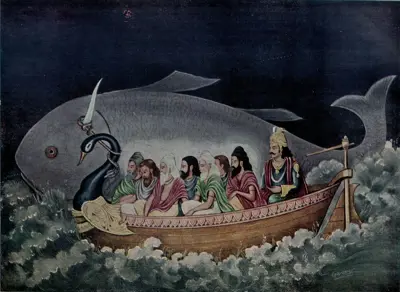
Manu (Sanskrit: मनु) is a term found with various meanings in Hinduism. In early texts, it refers to the archetypal man, or to the first man (progenitor of humanity). The Sanskrit term for 'human', मानव (IAST: mānava) means 'of Manu' or 'children of Manu'. In later texts, Manu is the title or name of fourteen mystical Kshatriya rulers of earth, or alternatively as the head of mythical dynasties that begin with each cyclic kalpa (aeon) when the universe is born anew. The title of the text Manusmriti uses this term as a prefix, but refers to the first Manu – Svayambhuva, the spiritual son of Brahma.
