Periyar E. V. Ramasamy Quotes
Brahmins cannot hope to claim a high and superior status forever. Times are changing. They have to come down.
Although technically illegal, India has a caste system where Brahmins are on the top and the “untouchables” are at the bottom. Discrimination exists throughout society except in some government programs.
Periyar E. V. Ramasamy, 1879–1973, Indian Dravidian social activist & politician, Founder of Dravidar Kazhagam, Veeramani, Collected Works of Periyar E.V.R., 2005
Sourced by: Eigen's Political and Historical Quotations


The traditional Hindu social structure established castes – levels of society with Brahmins at the top and untouchables at the bottom. When India gained independence, the caste system was made illegal. Nonetheless, it is still followed by hundreds of millions of Indians. Religiously the Buddhists and the Hindus have had different philosophies. Ilaiah is a Buddhist who opposes the traditional Brahmin social structure and is a supporter of “Dalitization” – a change in the Indian culture to make the Dalits (untouchables) equal de juro and de facto.


Manava Dharma Shastra. The Hindus believe in reincarnation and that the souls of animals move up the ladder and if they are good are eventually born as humans (Sudras). These are the lowest caste in this terribly discriminatory system—the “untouchables.” But if a Sudra lives a pious life and accepts his lot, he is reincarnated as a higher cast human (twice born). This law illustrates the incredible discrimination that the cast system produced. In modern India, the caste system is illegal and there is no discrimination in law or by government. However it is still terribly evident in social life, marriage, employment and most phases of Indian society. This text is a part of the Hindu Holy Texts. Hindus believe that Manu was a prophet whose text is revealed or inspired.


Many Indians follow a rigid caste system where all people are born and divided into 5 social castes which are immutable—there is no caste mobility. An “untouchable” –the lowest Indian Caste—even if he make a million dollars—is still an untouchable and the higher casts would have nothing to do with him. Most upper caste people would not allow an untouchable physician to treat him or an untouchable cook to prepare his food. The Caste system is illegal under Indian law, but the majority of the Indians still follow it.


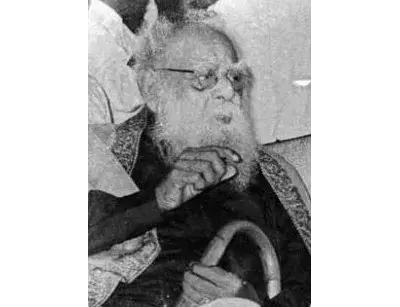
Erode Venkatappa Ramasamy, commonly known as Periyar or Thanthai Periyar, was an Indian social activist and politician who started the Self-Respect Movement and Dravidar Kazhagam. He is known as the 'Father of the Dravidian movement'. He rebelled against Brahminical dominance and gender and caste inequality in Tamil Nadu.
