Helmuth von Moltke Quotes
My most important responsibility is not to manage my generals but to control The Kaiser [Wilhelm II].
The Kaiser was very interested in the details of the German military activities and would often micro-manage by instructing individual officers about anything that struck him as important, Motke and the other Chiefs of Staff had the management of the Kaiser as one of his most critical tasks.
Helmuth von Moltke, 1848–1916, German Field Marshal & Chief of Staff, Quoted in Max Hastings, Catastrophe: Europe Goes To War 1914, 2013
Sourced by: Eigen's Political and Historical Quotations


This was very much a minority opinion at the time, and has much historical significance as he was the father of the British Prime Minister, Neville Chamberlain, 1869-1940, whose appeasement of Germany led to Word War II. . See {585941}.

See the American ambassador’s assessment after the war began {41089}


This was not the ravings of a right wing extremist. It was normative for Prussia as a whole. Right wing extremism as we think of it today was the norm of the ruling classes in Prussia and other parts of Germany. This book was a best seller in Germany. This quotation illustrates the mentality of the conservative, militarist, culture that dominated Germany at the time. The German aggression of WWI was not even considered as immoral but a God-given right.
The Hapsburgs were the ruling family of the Austrian Empire who wanted to invade Serbia in retaliation for their complicity in the assassination of the Austrian Archduke. This would likely bring Russia in the war in support of Serbia. The editor thought that there was no obligation to support Austria when they were planning a war of choice. What the editor did not know was that the German leadership very much wanted war at the time and supporting Austria was the perfect excuse to fight without them starting the conflict. However, the evidence became clear later than it was German aggression that turned the dispute into a World War.

The Times regretted that the Germans did not speak to the Austrians more vigorously when they were threatening to attack Serbia who harbored anti-Austro-Hungarian terrorists (see {642085}). What the Times editors did not realize was that the Germans had already made their war plans (see {642092}) and the Serbian issue was just the justification they needed to implement them. So there was no real reason for the Germans to discourage the Austro-Hungarian Empire from its mission to punish Serbia.


Peruvian Revolutionary Group. This speech was made from prison.


The Mexican War was as controversial as any war in American History. President Polk ordered action independent of the Congress, In all of American History there have been two Congressional censures of American Presidents. This was one. See {594521} for the other.

She was observing that while some autocrats try to change societies like Catherine the Great, and Kamal Attaturk, many try to maintain the traditional status quo like Franco of Spain and Kaiser Wilhelm of Germany


He lost the vote on this issue, and the Congress created the first committee to investigate and oversee military affairs.


MacArthur had been the Commander of our Military Forces in Korea. He had a huge ego, and he wanted to cross the border and attack China since Chinese Troops were aiding the North Vietnamese. He had previously assured the Joint Chiefs of Staff and the President that the Chinese would not send troops into Korea, but he was then wrong. And when they had attacked, they had erased the territorial gains that MacArthur had previously gained. The Joint Chief’s of Staff, the Secretary of Defense and the Secretary of State had decided upon a strategy which this time did not follow MacArthur’s strategic advice. The President approved the strategy, but MacArthur spoke and acted contrary. The President met with MacArthur and reiterated the strategy that the President approved. But MacArthur did not follow the orders of the Joint Chiefs. At the time, he and Eisenhower were America’s two most famous military leaders, and of the two MacArthur was senior and thought that he should be President. After he was fired, MacArthur addressed a Joint Session of Congress and gave his "Old Soldiers Never Die" speech which was his first active step towards the Presidency. It was a very sentimental speech with little content and nothing about why he had disobeyed orders. He was totally shocked when it was Eisenhower who was selected to run for President and not him.


While a pacifist in inclination, Sinclair believed in fighting just and necessary war. Note how civil he was with an organization with whom he did not agree.


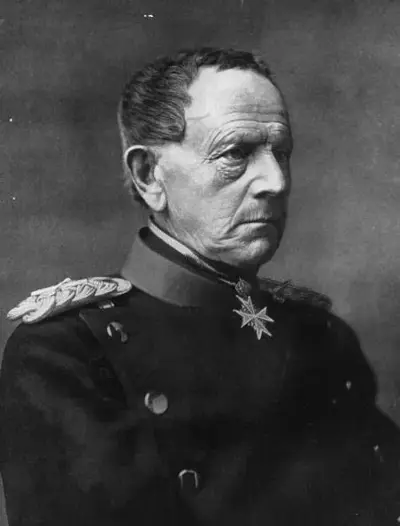
Graf Helmuth Karl Bernhard von Moltke was a Prussian field marshal. The chief of staff of the Prussian Army for thirty years, he is regarded as the creator of a new, more modern method of directing armies in the field. He commanded troops in Europe and the Middle East, commanding during the Second Schleswig War, Austro-Prussian War and the Franco-Prussian War. He is described as embodying "Prussian military organization and tactical genius." He was fascinated with railways and pioneered their military usage. He is often referred to as Moltke the Elder to distinguish him from his nephew Helmuth Johann Ludwig von Moltke, who commanded the German Army at the outbreak of World War I.
