Chiang Kai-shek Quotes
Modern warfare is by no means merely a matter of military operations. Economic affairs stand together with them in the first rank of the factors of importance.
Chiang, Kai-shek. Resistance and Reconstruction: Messages During China's Six Years of War, 1937-1943. Harper & Brothers, 1943, p. 80.


The State Department and the Defense Department often clash over power and control of various foreign policy activities and initiatives. Whereas secrecy is supposed to be a means of keeping critical information from the enemy, it is very frequently used to cover-up embarrassment and also to prevent a rival government agency from registering objections to ongoing programs. In the latter case the secret classification has two advantages for the agency wanting to maintain their autonomy. First, they keep the information from the rival agency for a while. Eventually, the other agency has people with secret clearance who will find out, but because the material is secret they cannot publicly discuss the wisdom of the policy of initiate a public debate.

In 1980 Russian troops moved into Afghanistan, and President Jimmy Carter imposed an American grain export embargo against Russia:


At the end of WWII there was much tension between Russia and the Anglo-American alliance. This plan was developed but never implemented. See {613195} for Prime Minister Winston Churchill’s description of the invasion idea.


One difficulty of diplomacy with many Islamic leaders is that the culture produces very aggressive rhetoric and very aggressive actions like Islamic terrorism. This quotation is often cited to demonstrate that it is the Iranians that had decided that America is it’s enemy; that America is to be humbled; and that their weapons development are targeted at America. This along with the most frequent Iranian slogan, “Death to America,” for many argues for preemptive military action or maintenance of a high state of readiness. Given statements like this from the leading soldier of the theocracy, there is little doubt that Iranian nuclear weapons would be a great danger to America. Therefore when Iran complains that America did not object to the fact that other nations have the nuclear bomb, they do not take their own rhetoric into account. No other nation with possible nuclear capability has made America its major military adversity and claims as an objective to humble the United States.

Hoover and most Republicans were generally opposed to sanctions and an instrument of foreign policy. 25 years after his presidency, the Republican Party started embracing sanctions as a tool of foreign policy and by the end of the 20th century, Republicans were sanction hawks. This quotation illustrates how American political parties and their philosophies change over time.


Up to that time U. S. policy was to provide training and assistance to the South Vietnamese government and military, but not to attack the North. America had backed a corrupt and incompetent South Vietnamese government and Bundy and other policy makers were convinced that the North Vietnam would win, if the fighting and governing were solely left to the South Vietnamese. Johnson, who had resisted this policy for several weeks finally acceded. It was a major escalation of the Vietnam War.


Helms had very bad experience even in hinting at unfavorable news about the Vietnam War. See {634520}. He didn’t even send copies to his own executives, the White House Chief of Staff or the other White House staff like the National Security Advisor who would normally receive copies of top secret memos.
The War Plan that the Germans had developed--{642092}—had gone awry at the battle of the Marne in late 1914.

The Germans did not believe the British would send land troops. See {642105}.


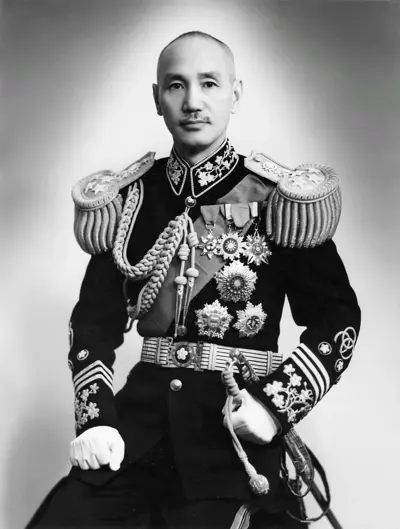
Chiang Kai-shek, also known as Chiang Chung-cheng and romanized via Mandarin as Chiang Chieh-shih and Jiang Jieshi, was a Chinese Nationalist politician, revolutionary and military leader who served as the leader of the Republic of China between 1928 and 1975, first in mainland China until 1949 and then in Taiwan until his death.
