Seyyed Hossein Nasr Quotes
Militarily, the great movements of resistance against colonial powers in the 18th and 19th century were almost all from Sufis: Imam Shamil in Caucasia, Amir Abd al Qadir in Algeria, The Barelvi family in the modern province of India, today which is Pakistan, and you can go down the line.
Nasr, Seyyed Hossein. "Seyyed Hossein Nasr Extended Interview." Religion & Ethics NewsWeekly, PBS, 14 Dec. 2007.


The cocoa plant produces leaves which the Bolivian Indians have been chewing for centuries as mild stimulant and assuager of hunger pangs. However with Western chemistry, the cocoa leaves can be turned into cocaine. The Cocoa crop has a ready market domestically and a hugely inflated profit for exports to the illicit drug trade. The United States has put pressure on Bolivian politicians to make growing of the cocoa plant illegal, and has supplied the chemicals and the funds to destroy the cocoa crop wherever they find it growing. This angers small peasant farmers for whom this is the most profitable crop and one of the few on which they can even grow in much of the country; it also angers the vast majority of the Indian population—about half the country—as they are pressured to give up chewing cocoa. The Indians have virtually no harmful effect from chewing cocoa leaves and say that the problem is with the Gringos who are drug users and cannot control themselves. Why should they give up their preferences, traditions and customs because the North Americans are irresponsible and cannot control themselves? Chavez, the first ethnic Indian President of Bolivia took the position that the peasants and peasant farmers should not have to sacrifice to benefit the rich Americans and others in the world. America has a prevention and education problem and Americans should stop buying the cocaine—a product on which the Bolivian Indians make almost nothing; they would be happy just growing leaves for the domestic market.

The President was Woodrow Wilson and the Peace Conference was that at the end of WWI. While the right of self determination is broadly accepted in American society, it was not always so.

The IRA had just murdered Lord Mountbatten with a bomb on his small boat. Mountbattten, then a 79 year old, elderly man in retirement was a member of the Royal Family. His grandson was also murdered. Mountbatten had not had anything to do with Ireland but to the IRA he was a symbol of British imperialism since he had been the British Viceroy of India. Actually, it was he who had organized and presided over Indian Independence.


A very passionate minority of India’s Muslims demanded a separate Islamic State (what would become Pakistan) but Hindu’s and Muslims were mixed throughout India and many Indians and British were concerned that there would be a bloodbath if the plans for independence went forward. Gandhi desperately tried to avoid violence but thought that independence was so important that the sectarian violence should not be an excuse for continued British rule. Unfortunately, millions of Indians were killed in the riots and ethnic cleansing and revenge that followed independence. Since then there has been much second guessing on how else the situation might have been handled.

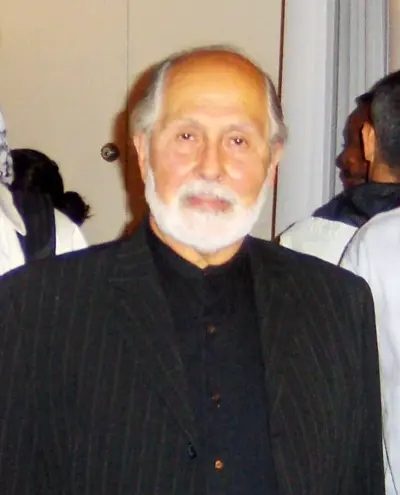
Seyyed Hossein Nasr is an Iranian University Professor of Islamic studies at George Washington University, and an Islamic philosopher. He is the author of scholarly books and articles.
