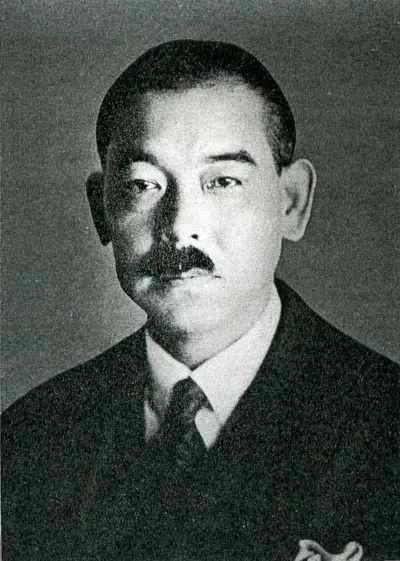
Yosuke Matsuoka Quotes
… saving Asia from the control of the Anglo-Saxons …. Washing the influences of British and American capitalism out of Asia
Yosuke Matsuoka, 1880-1946, Foreign Minister of Japan, Oft spoken objectives of Japanese Foreign Policy
Sourced by: Eigen's Political and Historical Quotations


Cuba was not Communist under Castro in the Russian style of Communism. However, Castro operated Cuba with many of the key Marxist & Leninist Communist Principles {636672} (some of which the Russians were hypocritical about). Cuba was very much a Marxist, Socialistic State with few of the democratic reforms that characterized European Socialism. Until the collapse of the Soviet Union, Russian Communist aid propped up the Cuban economy, and that was another motivation for Castro not to criticize Russian Communism so he often appeared to be in agreement with Russian Communism even when he wasn't.


The final decision regarding the attack on Pearl Harbor and war with America had to be made. The Emperor Hirohito, Prime Minister Tojo, the full cabinet and leading elder statesmen were invited. Hara attended as one of the latter class. America had instituted an embargo of critical raw material whose end was contingent of Japan withdrawing from the territory that they had invaded and stop their territorial aggression in Asia, an aggression which some Japanese leaders—notably the military—was absolutely necessary to provide for the growing Japanese population and its increasing standard of living. At the time, an embargo was a powerfully effective weapon, which left Japan only two choices: Withdrawal or War. In modern times nations have chosen to endure and evade embargoes rather than be forced into undesirable positions.


The Crises to which he was referring were the rapidly increasing hostility between Japan and the United States, Britain, and Russia. The very heavily military influence and participation in the government produced a very aggressive foreign policy of expansion in Asia. Sato resigned after two months in office, and served as a senior diplomat thereafter. Towards the end of the war with America & Britain, he was selected as the Japanese diplomat to try and keep Russia out of the war and assist with a negotiated peace. However, by the time he was authorized to approach Russia, the Japanese military situation was so bad that it was clear to the Russians that Japan could not win, so they joined the Allies, declaring was against Japan. After the war, he was one of the few Japanese political figures who had both moral credibility with the Allies and the respect of the Japanese people. He was appointed President of a group of diplomats that would advise the Japanese Parliament regarding foreign affairs.

The United States and England maintained officially that their stance was moral and ethical. And it was for most Americans and Britons. However, there were some, whose motivation was economically self-serving as this quotation suggests. The less control Japan had over China, the more other countries could freely trade with China.