Winston Churchill Quotes
Luckily ... there were Zulus and Afghans, also the Dervishes in the Soudan. Some of these might, if they were well-disposed, 'put up a show' some day.
Churchill, Winston. My Early Life: A Roving Commission. Thornton Butterworth, 1930, p. 64.


In both the First and Second World Wars the Western nations had a multilateral defense pact which did little good in the face of German aggression.


Self Given Title. The governor distinguished between friendly Indians from others to the consternation of Bacon and his followers.

Weebaigah was his predecessor as King. The Arabs and Europeans seeking slaves created a market for captives which had not existed in earlier times.


The Teutons were the Germanic tribes who were very warlike. His prediction of German war and aggression was demonstrated by WWI and WWII. The French Revolution diminished the influence of religion throughout Europe.

The final decision regarding the attack on Pearl Harbor and war with America had to be made. The Emperor Hirohito, Prime Minister Tojo, the full cabinet and leading elder statesmen were invited. Hara attended as one of the latter class. America had instituted an embargo of critical raw material whose end was contingent of Japan withdrawing from the territory that they had invaded and stop their territorial aggression in Asia, an aggression which some Japanese leaders—notably the military—was absolutely necessary to provide for the growing Japanese population and its increasing standard of living. At the time, an embargo was a powerfully effective weapon, which left Japan only two choices: Withdrawal or War. In modern times nations have chosen to endure and evade embargoes rather than be forced into undesirable positions.

1st Earl of Beaconsfield. The Dutch and British landed at Capetown, the Southern tip of Africa and gradually expanded North. The Zulus were equally expansionist in Africa. They started from Central Africa and expanded South. Both these expansionist powers seized the land from the indigenous Blacks. It was a race for who could dominate the land first. Eventually, these two powers ran into each other and there were two Zulu-English wars in which the Zulus not only held their own against the dominant white world power, but defeated them in several major battles. Many of the English clergy admired the Zulus, and the major political issues in Europe had to do with what was called the “Scramble or Africa”.


Every major Western power and Japan were looking to control parts of China for their own mercantile advantage. The Emperor, her adopted son, had stated that under no circumstances would the Chinese fight, but Cixi issued this decree, in effect, overruling the Emperor—a remarkable occurrence.

The Germans did not believe the British would send land troops. See {642105}.

The Times regretted that the Germans did not speak to the Austrians more vigorously when they were threatening to attack Serbia who harbored anti-Austro-Hungarian terrorists (see {642085}). What the Times editors did not realize was that the Germans had already made their war plans (see {642092}) and the Serbian issue was just the justification they needed to implement them. So there was no real reason for the Germans to discourage the Austro-Hungarian Empire from its mission to punish Serbia.


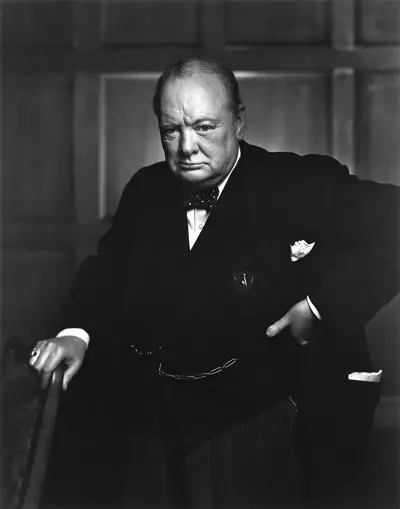
Sir Winston Leonard Spencer Churchill, KG, OM, CH, TD, DL, FRS, RA was the Prime Minister of the United Kingdom from 1940 to 1945, during the Second World War, and again from 1951 to 1955. Apart from two years between 1922 and 1924, Churchill was a Member of Parliament (MP) from 1900 to 1964 and represented a total of five constituencies. Ideologically an economic liberal and imperialist, he was for most of his career a member of the Conservative Party, as leader from 1940 to 1955. He was a member of the Liberal Party from 1904 to 1924. Churchill was also well known for his military career and as a historian, painter and writer, and among his many awards was the Nobel Prize in Literature.
