John Sergeant Wise Quotes
John Brown was tried for treason, murder, and inciting slaves to insurrection.
Wise, John Sergeant. The End of an Era. Houghton, Mifflin and Company, 1899, p. 129.


With martial law came the authority to seize ALL guns in the colony for the emergency. This was not to disarm the general populace. It reflected the fact that there were relatively few colonists who owned guns as they were very expensive. The Governor could take those that existed and use them to defend against the rebels or whatever. There were more gun owners in the Revolution but still a minority. Even after the War of 1812 only 30% of Americans were armed, and that shortly decreased to 10% as there was no real culture of gun ownership in early America. This would come around the Civil War.

It is not only in modern times that there were “litmus tests” for appointees. Franklin Pierce had been elected as a Democrat with a coalition that included Southerners who were able to dominate the weak Pierce precluding abolitionists from any appointments.

This is an important quotation because it shows that slavery was the principle reason that the South succeeded and began their rebellion. In the early 20th century, there was a movement to make the Confederacy and the rebellion more noble by promoting the idea that the Civil War was fought by the South for more lofty reasons such as States Rights, Original Construction, different economic philosophies and the like. This was a more noble cause then the right to deny other human beings their rights, to own other human beings who they could beat, torture, sexually use and even murder them was a pretty selfish and demeaning reason to have started a rebellion that would then cost more Americans their lives than any other American conflict. The succession documents and others of the Southern States and the Confederacy make it clear that slavery was THE issue and fleeting references to any of the others were only made to complain about the potential effect on abolition and the refusal of the abolitionist states to cease aiding and protecting fugitive slaves.


The Southerners were terrified at the thought of runaway and freed slaves as soldiers for the Union Army—even moreso than the Union leadership assumed. The Southerners knew far better than the Northerners how badly the slaves had been brutalized and assumed that the Blacks would want the same kind of revenge that they would seek if the roles were reversed.

His fear was well founded. That is exactly what the British tried to do.

Oates was a Confederate Colonel during the Civil War. His statement almost started a brawl as the Memorial Dedication was a joint North-South participation event. Northern politicians, officers and men were outraged and rose to their feet with several mounting the rostrum to refute Oates intemperate remarks. However, like Southern politicians of the 1960s, they produced a lot of redneck support with such extreme statements. The main reason this quotation is important is that most politicians of North and South wanted to get the animosity of the Civil War over with and to do so sponsored these memorial events where both sides could celebrate and remember the bravery of men fighting and dying for their cause. The photographs of former enemies shaking hands which the newspapers ran frequently, would give the impression that by the 1880s the hatred and animosity of the Civil War was behind the nation. However, that was not at all true. Most veterans of both sides maintained their hatreds throughout their entire lives. Even their children carried the hatred into the next generation. Politicians were expected to not open the scabs of the old wounds in public, but many like Oates found political utility in not doing so. The moral outrage of many in the North remained until WWII when regional unity genuinely transcended the Civil War. See {639364} for a Northern example with no political motive but with uncontrollable moral outrage.


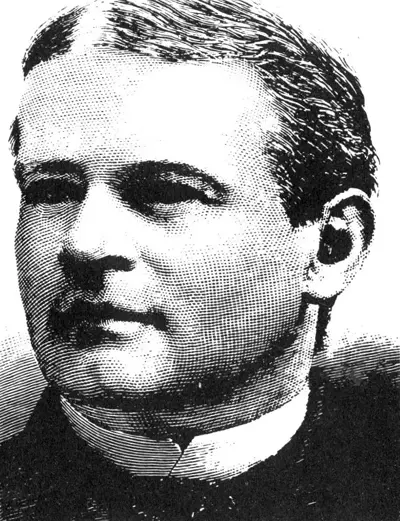
John Sergeant Wise was an American author, lawyer, and politician in Virginia. He was the son of Henry Alexander Wise, a Governor of Virginia, and Sarah Sergeant.
