Benjamin Franklin Quotes
It would be the best way … to provide in the Constitution for the regular punishment of the executive, where his misconduct should deserve it, and for his honorable acquittal, where he should be unjustly accused.
Benjamin Franklin, 1706-1790, Member of the Continental Congress & the Constitutional Convention, Governor of Pennsylvania, President of the Pennsylvania Assembly, U.S. Minister to France, Postmaster General of the American Colonies, Debate, Constitutional Convention, July 20, 1787
Sourced by: Eigen's Political and Historical Quotations

In England, the King was above the law. However, impeachment was a tool that could be used against his favorite ministers. In debating the United State Constitution one of the first questions to be determined was whether impeachment could be a tool used against the President or like, England, only the other government officials. Franklin urged the President be included. See also Mason: {584246}.


President George W. Bush had ignored a federal law and tapped the phones of Americans without probable cause and a warrant issued by a court. The President’s defenders argued that the President, as Commander in Chief, has the Constitutional responsibility to lead the military and protect the nation. Intelligence gathering is part of military activity. Therefore the intelligence gathering is a Constitutional duty and the Congress, under the separation of powers doctrine, may not interfere with the President’s Constitutional Duty to conduct intelligence. Under this doctrine, the President need not obey laws that he believes impinge on his management of the war effort and the defense of the nation. Most legal scholars believe that this argument is nonsense, but the George W. Bush administration has stated the doctrine and it was the subject of much litigation.


In England, the King was above the law. However, impeachment was a tool that could be used against his favorite ministers. In debating the United State Constitution one of the first questions to be determined was whether impeachment could be a tool used against the President or like, England, only the other government officials. Mason argued that the President must be included and his view prevailed. See also Benjamin Franklin: {642885}.


The view that the Supreme Court was the final arbiter of constitutional controversies was not held in early America.

On why the President should not be given the right to go to war without the approval of Congress:


Powell was the Secretary of State and Addington kept advising the administration that as long as the President was acting in defense of the country in his capacity as Commander in Chief, he did not have to obey any existing laws that had been Constitutionally passed which in the opinion of the President restricted or limited the President or the executive branch. Addington was an attorney and Assistant to the Vice President, but he was given much responsibility for administration policy. Powell the Secretary of State of the Administration could not have disagreed more and although most politicians including Republicans disagreed with the Addington thesis, Powell was one of the few Republicans to criticize the Addington position.

Hatch was the chairman of the Senate Judiciary Committee at the time.


This shameful quotation was shocking to most readers. It is subject to two interpretations: One that judges who did not rule on Constitutional issues the way conservative extremists wanted would come to physical harm. The other, that conservatives should pressure judges by withholding appropriations for the courts, impeachments and recall elections where they exist, as well as funding potential opponents for those jurisdictions where judges are elected. Both meanings were disgraceful in the view of most Americans. Later, DeLay was convicted and sentenced to jail for money laundering and illegally spending and raising campaign funds. He was also reprimanded by the House Ethics Committee for unethical methods of fund raising for other earlier actions.


The debate was about the unlimited pardon power of the President. Madison argued that the check was the impeachment power. However, Presidents had tended to make large numbers of pardons just before they leave office so the impeachment power works only as a check for the beginning and middle part of their term.


Parliament had developed a formal mechanism of removing officials in extreme circumstances. It was borrowed for the U. S. Constitution. See {584256}.
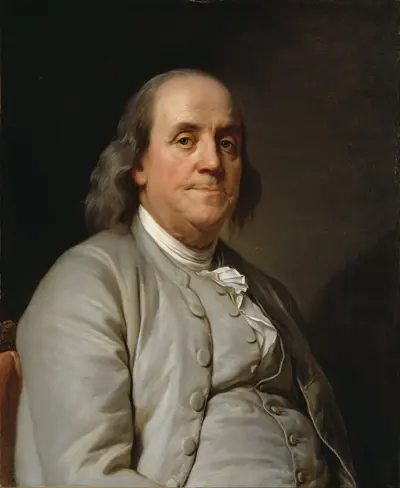
Benjamin Franklin FRS FRSA FRSE was one of the Founding Fathers of the United States. A polymath, he was a leading writer, printer, political philosopher, politician, Freemason, postmaster, scientist, inventor, humorist, civic activist, statesman, and diplomat. As a scientist, he was a major figure in the American Enlightenment and the history of physics for his discoveries and theories regarding electricity. As an inventor, he is known for the lightning rod, bifocals, and the Franklin stove, among other inventions. He founded many civic organizations, including the Library Company, Philadelphia's first fire department, and the University of Pennsylvania.
