Thaddeus Stevens Quotes
It is my purpose nowhere in these remarks to make personal reproaches; I entertain no ill-will toward any human being, nor any brute, that I know of, not even the [Democratic] skunk across the way to which I referred. Least of all would I reproach the South. I honor her courage and fidelity. Even in a bad, a wicked cause, she shows a united front. All her sons are faithful to the cause of human bondage, because it is their cause. But the North—the poor, timid, mercenary, driveling North—has no such united defenders of her cause, although it is the cause of human liberty ... She is offered up a sacrifice to propitiate southern tyranny—to conciliate southern treason.
Thaddeus Stevens, 1792-1868, U. S. Congressman (Whig and Republican, PA), Titular Republican party leader, House debate over the Fugitive Slave Act, June 10, 1850
Sourced by: Eigen's Political and Historical Quotations

When the first Southern States seceded, each appointed a whose job it was to persuade the other Southern States to also secede. In this case Hale was marketing secession to Kentucky which with Maryland were the only two Southern States to reject what they regarded as treason and rebellion. The importance of the quotation however is in his argument which was all based on enmity to racial equality and abolition. Later Southern apologists would argue that the Civil War was fought, not about slavery and racism butt about different philosophies of government. See {623715} .

As just one example of Southern States' reasons, see {583044}. Many of the Northern States had passed laws declaring everyone in the state was free and making it illegal to return or assist in the returning of escaped slaves. The Southerners got the Federal Fugitive Slave Act passed which required all Americans to assist in recapturing escaped slaves. It was the Northern States who claimed states' rights were being trampled. The South was vehemently opposed to States' Rights when it came to allowing individual states to decide who was free and who was not. The Southerners had only one fundamental reason for secession—the maintenance of the Negro slavery system on which much of their economy depended as did their sociology, culture, and way of life.


I should sooner remain in Southern bondage than avail myself of the opportunity of Northern freedom.
Hughes was a strong critic of the exploitation of laborers in the North by what he called the “bloated capitalist” First Irish Bishop in the United States
This was a decade before there was a Civil War. Secession and war had been advocated by many Southerners for years before. Most people are not aware that the move toward secession did not suddenly appear when Lincoln was elected President. It had been festering for over a decade. The other importance of the quotation is that the Southernors knew perfectly well that their actions would lead to a civil war. Some Southern apologists claim that the South never saw their actions as treason, rebellion or the cause of a civil war. This quote shows that they well knew what they were doing and the result was exactly as most Southern leaders expected.
This editorial from an Alabama newspaper in 1856 is a wonderful illustration of the animosity held by many in the South towards the North. It also shows the major difference in egalitarianism between the North and the South at that time. The only Southerners who could read were the upper class who were terribly fearful of the effects of upward mobility of whites in a slave free industrial democracy. “Mechanics” at the time referred to all skilled craftsmen.

This was his name for the wealthy slaveowners in Tennessee. He was the military governor of Tennessee when he so labeled the secessionists.


"Imperium" is a Latin word which, in a broad sense, translates roughly as 'power to command'. In ancient Rome, different kinds of power or authority were distinguished by different terms "Imperium" referred to the sovereignty of the state over the individual—Wikipedia. The Consul was a wonderful diplomat. He had no respect for the South not only because they were fighting to maintain slavery, but also he found most of their diplomats and officials very incompetent. He found it hard to participate in all the Confederate ceremonies as he was their exhibit number one that they had International Recognition and they "exhibited him frequently. Despite this he was charming and never argumentative about slavery or other political positions that he loathed. As a matter of fact, the Southern Diplomats regarded him as a man sympathetic to the South with an understanding of their point of view. As a result he gained a huge amount of intelligence which he regularly dispatched back to London. England was neutral {35520} in the Civil War, but England did not recognize the Confederacy as a nation, else they would have sent an ambassador. The Southern politicians worked hard to get him to carry their message that if they would be recognized, they would grant England many favorable trade advantages as the English textile industry really wanted Southern cotton. While apparently sympathetic to the Southern cause, his reports contained all the negative information about the South and counseled against recognition just as the English Ambassador in Washington did—see {583131}.


Bragg and other Southerner leaders had an unusual concept of equality. Ever since the original Constitution, Northerner’s votes counted for themselves only while a single Southerner’s vote counted for all his slaves as well. So the individual Southerner always had more political power than his Northern counterpart. However, this notion of equality reached it’s acme when it came to the new territories. The Southern argument was that Southerners could not equally prosper in the new territories of Kansas and Nebraska if they could not bring their slaves to work the land. The thought that Southerners were equally able to personally work the new lands or pay labor seems to never have occurred to them. If Northerners could prosper that way then Southerners should be equally able to do so also. However, many Southern whites simply could not conceive of a “gentleman” working in the fields. Therefore they would not be equally able to prosper in the new territories.

While Douglas and Lincoln were political opponents with little love lost between them, both were patriots. Douglas’s position were much more popular in the South, and the moment he realized that Lincoln would win the Presidency, he headed South where he was very persuasive in trying to hold the Union together, but he could not see all the potential rebels and was only effective with some. South Carolina not only seceded, but in order to prevent any changing of minds, some the worst of the South Carolinians, attacked Fort Sumter firing on the American Flag and attacking and capturing the Union troops who were totally outnumbered. The Civil War was then inevitable.


Gusley had been captured by the Confederates and was in a prison camp. Richardson published Gusley’s diary and Southerners were surprised to find that this Yankee who had been bombarding them from a ship was very similar to them in many ways including slavery but saw the situation regarding succession as worth fighting for preservation of the Union.


Ingersoll was considered to be the greatest orator and political thinker of his day, but his overt atheistic views curtailed his elected political career.

The amendments failed as did the compromise.

The American Civil War was followed by intellectuals throughout the world. Most were offended by the immorality of the slavery that the South was fighting to maintain, but admired the way they organized and fought for their principles.

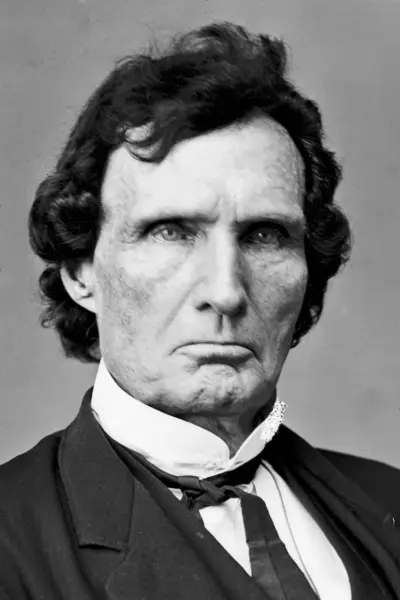
Thaddeus Stevens was a member of the United States House of Representatives from Pennsylvania. He was one of the leaders of the Radical Republican faction of the Republican Party during the 1860s. A fierce opponent of slavery and discrimination against African Americans, Stevens sought to secure their rights during Reconstruction, leading the opposition to U.S. President Andrew Johnson. As chairman of the House Ways and Means Committee during the American Civil War, he played a leading role, focusing his attention on defeating the Confederacy, financing the war with new taxes and borrowing, crushing the power of slave owners, ending slavery, and securing equal rights for the Freedmen.
