Robert G. Ingersoll Quotes
It is hard to conceive of the utter demoralization, of the political blindness and immorality, of the patriotic dishonesty, of the cruelty and degradation of a people who supplemented the incomparable Declaration of Independence with the Fugitive Slave Law.
Ingersoll, Robert G. "Abraham Lincoln." The Works of Robert G. Ingersoll, Volume 3, Dresden Publishing Co., 1900, p. 124.


Jefferson was one of the early observers that the the institution of slavery corrupted and depraved the whites.


It was then the practice of some men to engage in an attempted moral justification of slavery, including, in many cases, resorting to Biblical scripture and principles to argue that slavery was the will of God.


His voyage took him to several slave countries where his anti-slavery views were challenged by locals.


There were no women’s shelters in the 19th century, and the police or sheriffs would not entertain a complaint from a wife for assault, sexual or otherwise. She compared the state of women to that of fugitive slaves a few decades earlier. Then there was the Underground Railroad and other institutions which would shelter and help the slaves. There was no such mechanism for women abused in their marriage.

This quotation so impressed Thomas Jefferson that he wrote it in his Commonplace Book.


The President often referred to this statement as an example of his wife’s acumen. She had been born to a Southern plantation and inherited the land and the slaves. Her view, and his, were typical of the Southern point of view in early America.


Brown was the richest man in Rhode Island and made much of his money in the slave trade. This quotation shows that slavery was not completely a North verses South split. Northerners like Brown for whose family Brown University was named, was as virulent supporter of slavery as the most ardent Southerner.

In 1910 a consortium of American and European banks was formed to loan the Chinese government money for development. A preliminary agreement was made, but the Chinese backed away, responding to the growing domestic unrest at foreigners controlling too much of China's economy. The consortium appealed to the Western governments' foreign offices to pressure the Chinese; the American ambassador was instructed to demand that the Chinese conclude the loan negotiation. He described what he was instructed to do as:. The loan was concluded and led to protests and violence in China.


Although English, Cobett spent time in America and published a newspaper, The Porcupine Gazette, in Philadelphia. We was very conservative but on the issue of slavery his resembled a liberal point of view. He never used sugar, coffee, or rum because slave labor produced them. However, he advocated legally enslaving lazy people, blacks and whites, who would not work.

Even before we had a Constitution there was major opposition to slavery. The “price” of the American Union was the acceptance of the slavery of the South. But the hypocrisy of a country based on liberty to allow and enforce slavery was not lost on the founding fathers. Ironically the abolitionists among the founding fathers were certain that they could persuade the Southern slaveholders of the error of slavery in a few years and things would be set right in the land. Even George Washington {630626}, and Thomas Jefferson and some other slaveowners at the time wished to see its abolition. Slaveholding Southern Founding Fathers in general were so wary of the abolitionists that they achieved structural, disproportionate, power in the new Constitution to ward off the abolitionists attempts to reform slavery.
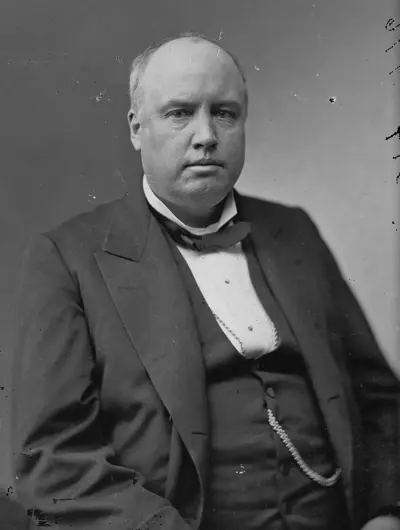
Robert Green "Bob" Ingersoll was an American lawyer, a Civil War veteran, political leader, and orator of the United States during the Golden Age of Free Thought, noted for his broad range of culture and his defense of agnosticism. He was nicknamed "The Great Agnostic". Ingersoll was considered to be the greatest orator and political thinker of his day, but his overt atheistic views curtailed his elected political career.
