George Mason Quotes
[I]t is contrary to the principles of reason and justice that any should be compelled to contribute to the maintenance of a church with which their consciences will not permit them to join, and from which they can derive no benefit
George Mason, 1725-1792, Member, Virginia & Federal Constitutional Conventions, Virginia Declaration of Rights, 1776
Sourced by: Eigen's Political and Historical Quotations


This is one of the earliest expressions of the first regarding freedom of religion. Note that there was concern about the possible government negative effects on religion as well as the other way around. The Continental Congress was very disparate & often inconsistent. Four months after this passed, the Continental Congress voted to have & pay Christian Protestant Chaplains for the army despite a critical shortage of funds. Further they ordered Washington to require the troops to attend Christian religious services which the General did. After this statement, many Protestant clergy objected. Congress actually depended on the clergy to communicate with the public & prepared many open letters which the asked the clergy to read from the pulpit—especially ones recruiting troops. With the Revolution going badly, the Congress & Washington did not want a dispute with the clergy many of whom were already being pressured against the revolution by their religious superiors in England.


Catholics were blamed by some for the defeat of Henry Clay in 1844. Anti catholic sentiment was high:. Johnson was then a Congressman representing a district where there were few Catholics and strong anti-Catholic feeling.

Pen name: Jack Nipps

The Senate was presented with James Madison’s Language for the First Amendment. These three alternatives were proposed and rejected. The rejected versions turn out to have been very important. Some have argued that the First Amendment does not prohibit Congress making laws regarding religion as long as it doesn’t favor one religion over another—for example pay for clerics of all religions. However, that was the third proposal and it was rejected in favor of the high wall of separation proposed by Madison.

The Soviet state had varied views regarding religion in different times. In the early days of the Russian Revolution, the Russian Orthodox Church was a major supporter of the Csar and serfdom. That caused a certain hostility to the Russian Church. That Church meanwhile had previously been extremely hostile to Jews and Roman Catholics and never recognized Protestant Churches. So Russians as a group were already discriminating against all religion except the Russian Orthodox Church before the Communist Revolution took place. When the Russian Communists were well entrenched in power, they saw the Russian Church as an obstacle to modernization and were hostile to any group that had a loyalty to any force or deity that was not the Soviet State.

Williams was the first theologian who not only advocated religious toleration but argued that Christianity demanded it and the separation of church and state.


This publication was one of the best selling in the entire history of America. Rarely has a single publication been read by as high a proportion of a population. Those who support the maintenance of a strict separation of Church and State in America often point to this quotation and the popularity of Common Sense as evidence that not only were the founding fathers in favor of strict separation but so was the general Colonial American public.
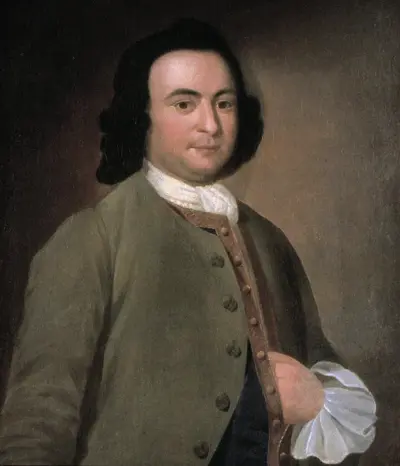
George Mason IV was an American planter, politician and delegate to the U.S. Constitutional Convention of 1787, one of three delegates who refused to sign the Constitution. His writings, including substantial portions of the Fairfax Resolves of 1774, the Virginia Declaration of Rights of 1776, and his Objections to this Constitution of Government (1787) opposing ratification, have exercised a significant influence on American political thought and events. The Virginia Declaration of Rights, which Mason principally authored, served as a basis for the United States Bill of Rights, a document of which he has been deemed a father.
