Sam Ervin Quotes
Every American has the constitutional right not to be taxed or have his tax money expended for the establishment of a religion.
Samuel J. Ervin Jr., 1896-1985, U. S. Congressman & U. S. Senator (Democrat, NC), March 13, 1968
Sourced by: Eigen's Political and Historical Quotations


While this principle is very clear to us today, and was to the people who originally ratified The Constitution, there were many attempts by Christian groups to establish a privileged position for Christianity. For example, for years the Sunday Sabbath was legally enforced by unconstitutional Blue Laws that prohibited businesses from operating on the Christian Sabbath and prohibited activities that compete with Sunday church attendance. Supreme Court Justice Story even argued that the First Amendment allowed Christian religious supremacy and Cooley wrote this to refute Story’s now discredited doctrine.


This is a critical quotation on the government establishment of religion issue. There are a few people who have argued over the years that the Founding Fathers and their culture was religious and where they were careful to avoid favoring one religion over another, they did NOT intend to put atheism on the same equal plane as religion as far as government action is concerned. However, some of the Founding Fathers were atheists, and some others like John Adams were deists—they believed in a God but not in the Trinity or in Judaism or any organized religion. So this quotation makes it clear that the First Amendment does NOT favor religion over non religion or secularism. Atheism must be on an equal footing but not on a higher plane.


This is one of the key documents showing the “wall of separation of church and state” was in use in early America. Almost 200 years later the Chief Justice of the Supreme Court seemed ignorant of this communications. See William Rehnquist: {373663}

Madison, while a member of the House, had opposed the appropriation of funds for Congressional Chaplains and lost. Strict constructionists often quote his statements regarding Congressional Chaplains. Loose constructionists point to the fact that a majority of the Congress indeed appropriated the funds.


Opponents of the strict separation of church and state use this quotation to support their view. However, Story herein describes public sentiment, not what was passed and ratified in the Constitution and Bill of Rights. See {614309} and {614310} for his statements from the same work that show that there was no question in his mind but that church and state are separated by the Constitution and the First Amendment.


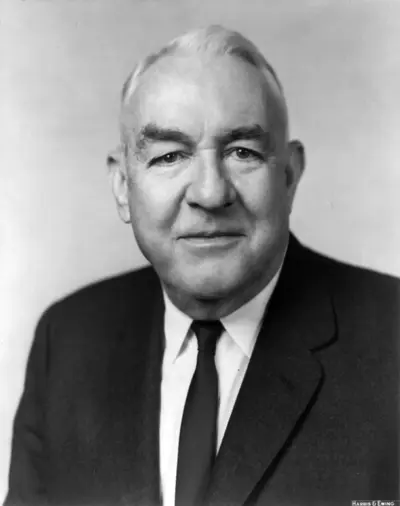
Samuel James Ervin Jr. was an American politician. A Democrat, he served as a U.S. Senator from North Carolina from 1954 to 1974. A native of Morganton, he liked to call himself a "country lawyer", and often told humorous stories in his Southern drawl. During his Senate career, Ervin was a staunch defender of the Jim Crow laws and racial segregation, as the South's constitutional expert during the congressional debates on civil rights. Paradoxically, he was also known for his support of civil liberties. He is remembered for his work in the investigation committees that brought down Senator Joseph McCarthy in 1954 and especially for his investigation of the Watergate scandal in 1972 that led to the resignation of Richard Nixon.
