William Lamb, 2nd Viscount Melbourne Quotes
Is it better to lower the price of corn, or isn't it? It is not much matter which we say, but mind, we must all say the same.
2nd Viscount Melbourne
William Lamb, 1779-1848, British Prime Minister (Whig), Statement at a Cabinet Meeting
Sourced by: Eigen's Political and Historical Quotations

Manava Dharma Shastra. Ancient Hindu India had what may well have been the most regulated mercantile economy of any society in history. All prices for all goods were to be set by the king. In order to prevent the stultifying effect of price controls, the Hindus required that the prices be reset very frequently to reflect various market conditions. It was a highly regulated form of capitalism. This text is a part of the Hindu Holy Texts. Hindus believe that Manu was a prophet whose text is revealed or inspired.


The Black Plague, which raged in Europe from 1347 to 1349, had left relatively few able bodied people alive. Given this shortage of labor there was a rapid inflation, especially to the distress of the landed class who had to pay much more for their food. The king therefore established what amounted to price controls, wage controls and forces labor. See {611125} and {611126}

Hoover was the Food Administrator at that time. Although he gave lip service to the free market economy concept, he was proposing government price controls and rationing. When the free market was not functioning, at this time in his career, he was willing to use government controls and regulation. By the end of 1918 over 250,000 food-handling corporations, firms, and individuals were under Food Administration licenses. Meat, fish, poultry, eggs, butter, milk, potatoes, fresh and dried vegetables, and fruits, canned goods, the coarse grains and rice, vegetable oils, coffee, and such various commodities accessory to food-handling, as ice, ammonia (for ice-making), arsenic (for insecticides), jute bags, sisal, etc., were under direct control. Ironically, later when he was President and faced with the Great Depression, he had become much more rigid and would not “interfere” with the free, private market and use government to solve the national problems. It was Franklin Delano Roosevelt who did that after Hoover would not. At the time he gave this speech, Hoover was not very political and was more of a technocrat. It may have been that by the time he became President he was intellectually and politically locked in to Republican Party conservative economic ideology.


Brandeis was U. S. Supreme Court Justice Louis D. Brandeis, 1856-1941, who wrote that competition would control prices if only healthy competition could be maintained—the problem was resolved by both increasing competition and much more stringent regulation of corporations.


To the modern reader utterances such as this from a Conservative Prime Minister seem astounding. However, the Great Depression existed in Canada as well as the United States, and Franklin Delano Roosevelt was not the only world leader who would reach the conclusion that business and capitalism must be profoundly regulated and the system changed if it was to be saved.

James’ supporters (Jacobites) believed James was the rightful heir to the English throne as well.


Collection of Spoken Words of the Prophet. Ironically, despite the reverence with which words of the Hadith are accorded in Islam, from time to time Muslim theologians and authorities have attempted to establish “fair prices” despite this free market view of the Prophet.


After abdicating the Spanish throne in 1556, Charles retired to the monastery at Yuste, where he continued to contemplate political questions and serve as the Holy Roman Emperor until his death in 1558.
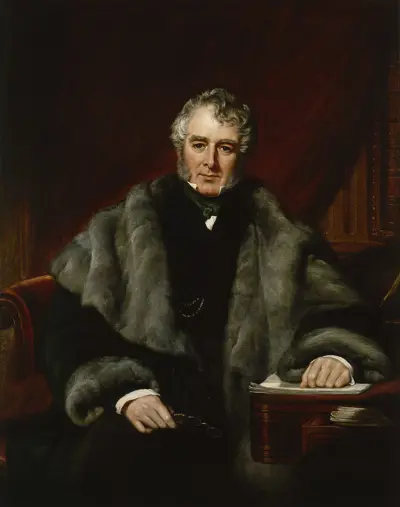
William Lamb, 2nd Viscount Melbourne, PC, PC (Ire), FRS, in some sources called Henry William Lamb, was a British Whig Home Secretary (1830–1834) and Prime Minister (1834 and 1835–1841). He is best known for being prime minister in Queen Victoria's early years and coaching her in the ways of politics, acting almost as her private secretary. Historians have concluded that Melbourne does not rank highly as a Prime Minister, for there were no great foreign wars or domestic issues to handle, he lacked major achievements, he enunciated no grand principles, and he was involved in several political scandals in the early years of Victoria's reign.
