Mengistu Haile Mariam Quotes
In this country, some aristocratic families automatically categorize persons with dark skin, thick lips, and kinky hair as "Barias" [Amharic for slave]... let it be clear to everybody that I shall soon make these ignoramuses stoop and grind corn!
There had been an Ethiopian aristocracy that via inbreeding had tended to have lighter skins and that created over the centuries a discriminatory society based on skin color. Although a brutal, criminal, dictator, he initiated some worthwhile reforms although his methods were reprehensible.
Mengistu Haile Mariam, President of the People's Democratic Republic of Ethiopia, Dictator & Convicted Genocide Perpetrator, Ethiopian Review, February 1994
Sourced by: Eigen's Political and Historical Quotations

She was one of the first prominent white southerners to denounce racial segregation.

It was not until this publication that people who suggested that discrimination and lack of education and opportunity might have something to do with the problem Blacks faced in society were regarded by many Americans as anything but left wing intellectuals.

Newsletter of the United Sons of Confederate Veterans


This quotation explains why so many of the Southern poor so actively supported the racist Slavery system even though they could not afford slaves and received no direct benefit from slavery or the discrimination against free Blacks. The poor were not at the bottom of the totem pole, and therefore had a dignity and social status, that the poor in a racially integrated society never possessed.


There was a huge amount of racial interbreeding during the early slavery times of America. Some was consensual as people will be people, but much was the rape of Black slaves my white masters—a concept that was never considered rape by law as one cannot commit a crime against one’s own property. The result after time was every possible combination of white/black mixture. There were names for many of the combinations: Quadroons were one fourth Negro. Octaroons, one-eighth. During and after reconstruction, for purposes of discriminatory law, who was a Negro? The Louisiana “one drop rule” said that if there was ANY trace of Negro ancestry, that person was a Negro and would be discriminated against. Of course, what would happen was that many mixed race children were light skinned and looked white and many were black and all shades in between. It was relatively easy for the lighter skinned “one drop” Negroes to pass as white especially if the left the state. But if anyone accused them of being Negro, they would have been guilty of committing crimes. Some in modern times have little comprehension of how the white plantation slave owners and other whitrd could condemn their own children to a second class life of vicious discrimination, but that is exactly what they did. The great irony here lies with the modern KKK, Nazi, and other White Supremacy Groups. They still hold to the “one drip rule for their viciousness. However, under the one drop rule, almost all of them would be Negroes if they went back far enough, and ALL ARE BLACK under the one drop rule as with modern DNA and genetic analysis, we now know that every human alive today emanated from a Black woman in Africa.

The logic train from mixed blood to why lynching should not be prohibited is obscure but in filibusters Senators tended to just repeat all of their stump speeches or anything else because they had to keep talking.


Incredible as it seems today, no Black person had ever dined in the White House as a guest of the President. African American servants were common. And Abraham Lincoln had received many Black visitors as had Presidents after him. But no president had ever had a Black person to dine as a social equal. The photo, reproduced here, illustrates the parity. But that was the worst thing a President could do so far as Tillman and his fellow racists were concerned. They had, since the end of the Civil war, used violence and terrorism to murder, maim and/or intimidate the Negro population to remain in an economic and socially inferior position. In Tillman’s state over these decades they had more lynchings than legal executions and there were plenty of them. Newspapers over the South riled up the whites and there was a wave of terror to be sure that the President’s importune action would not be taken as an endorsement of the Negro’s right to any equality or even dignity. This dinner essentially wedded all the Blacks to the Republican Party and all the Southern Whites to the Democratic Party. This would remain the political situation for over 60 years until the Democrats passed the LBJ Civil Rights Act in 1964 and the Republicans decided to solicit the Southern White racists who accepted the invitation and within a few years, there was a complete reversal of party loyalty of most Blacks and most Southern White Racists.


After attending a Lincoln speech, Booth said to Lewis Powell, one of his band of conspirators, “Now, by God, I’ll put him through. That is the last speech he will ever make.”

Prior to his diplomatic service, Dodd was one of the preeminent scholars of the country.


Booth was the younger son of a very prominent Northern family of actors. His older brother was considered the greatest American actor, and the rest of the family were abolitionists and vehement Union supporters. They found young John’s views reprehensible.


Charleston was in the Southern part of the state where most people supported slavery. Douglas made an unequivocal pitch for the racist vote {600060} and forced Lincoln to take a stand. Like many politicians today, Lincoln decided to give the audience what they wanted to hear. It is not clear whether or not he ever believed this statement or was just pandering in a political campaign. He had never said this in the Northern part of the state of before. Lincoln’s views on race changed and matured over the years, culminating in the Emancipation Proclamation. Lincoln lost the Senate seat to Douglas.
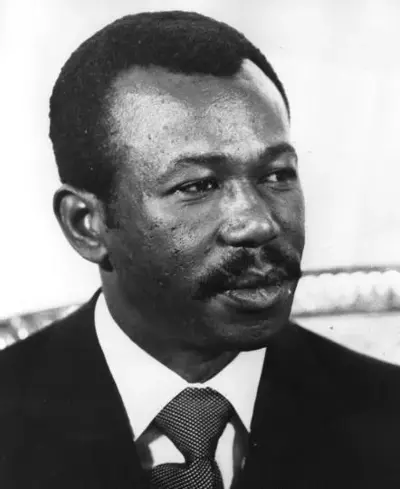
Mengistu Haile Mariam is an Ethiopian soldier and politician who was the president of Ethiopia from 1977 to 1991 and General Secretary of the Workers' Party of Ethiopia from 1984 to 1991. He was the chairman of the Derg, the socialist military junta that governed Ethiopia, from 1977 to 1987, and the President of the People's Democratic Republic of Ethiopia (PDRE) from 1987 to 1991.
