William E. Dodd Quotes
The South came to adopt a social philosophy wonderfully like that of Germany …. Inequality became the natural order; slavery was accepted as a blessing from heaven; and masters of plantations became the supermen from whom ideas and good reasoning were confidently expected.
Prior to his diplomatic service, Dodd was one of the preeminent scholars of the country.
William E. Dodd, 1869-1940, Sociologist & Historian, U. S. Ambassador to Germany, Description of the South prior to the civil war, “The Social Philosophy of the Old South,” American Journal of Sociology, May 1918
Sourced by: Eigen's Political and Historical Quotations


It was indeed the first government that was ever founded on that fallacious principle. In retrospect, it was amazing that more Southerners did not question why no other government in the history of the world based a society on that principle. The Southern hubris was a great failing for them.

There had been an Ethiopian aristocracy that via inbreeding had tended to have lighter skins and that created over the centuries a discriminatory society based on skin color. Although a brutal, criminal, dictator, he initiated some worthwhile reforms although his methods were reprehensible.

His solution was not to change the prejudice or improve the opportunity for Blacks but to have complete separation of the races. See {625687}.


She was one of the first prominent white southerners to denounce racial segregation.


This quotation explains why so many of the Southern poor so actively supported the racist Slavery system even though they could not afford slaves and received no direct benefit from slavery or the discrimination against free Blacks. The poor were not at the bottom of the totem pole, and therefore had a dignity and social status, that the poor in a racially integrated society never possessed.


He was driving through Tennessee and some white demonstrators were carrying racist signs insulting to Blacks. A companion asked what was the cause of Southern white racism.

This concept was one of the main selling points that the Southern leadership used to invest poor whites in the Confederate cause. The poor white, no matter how bad off he’s was, cold always see himself above the Negroes who were fit for being a servant while he was above that. See Jefferson Davis Quotation
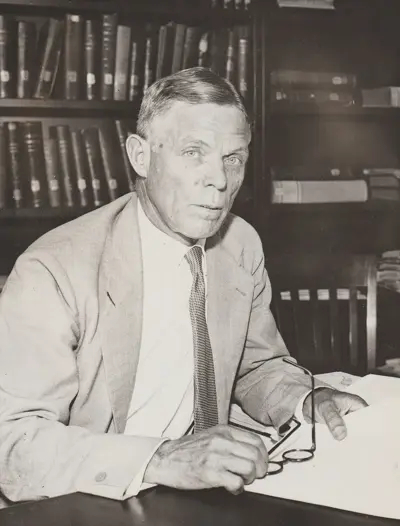
William Edward Dodd was an American historian, author and diplomat. A liberal Democrat, he served as the United States Ambassador to Germany from 1933 to 1937 during the Nazi era. Initially a holder of the slightly Antisemitic notions of his times, he went to Germany with instructions from President Franklin D. Roosevelt to do what he could to protest Nazi treatment of Jews in Germany "unofficially," while also attempting to follow official State Department instructions to maintain cordial official diplomatic relations. Convinced from first hand observation that the Nazis were an increasing threat, he resigned over his inability to mobilize the Roosevelt administration, particularly the State Department, to counter the Nazis prior to the start of World War II.
