Marquis de Lafayette Quotes
In the American colonies, the main problem of liberty has been solved, demonstrated and practiced in such a manner as not to leave much to be said by European institutions.
Lafayette, Marie Joseph Paul Yves Roch Gilbert Du Motier. Memoirs, Correspondence and Manuscripts of General Lafayette. Vol. 3, Saunders and Otley, 1837.


Most politicians and philosophers would argue that liberty is both an individual right and a group right. However there are money who do not recognize group rights and feel that they are inimical to individual rights.

Garfield reminded Americans of how radical and unusual the concept of democracy had been at the time of the adoption of The Constitution, and that the American Revolution was one of ideas as well as armies.

During the early days of the American independence movement, many were preoccupied with the philosophical and theological issues of whether the Almighty approved of monarchy or not. Parker urged concentration on assuring independence first.

His political view was one of general opposition to Government—especially large Government. However, even the Conservative voters whose nomination he sought did not elect him to any public position. His inherited fortune allowed him to run for office and campaign.

Taft was making his first appearance as the newly appointed Governor General of the Philippines. Prior, the country had been administered by General Arthur MacArthur, father of General Douglas MacArthur, and some military officers and a few civilians, and the results had been quite poor—not unlike the administration of Iraq after the Iraq War at the beginning of the 21st century. However, unlike the Iraq situation, Taft admitted our failings and explained them, as shown in this quotation. He learned fast and had good instincts and developed a cadre of excellent administrators who got along very well with the people and did a good job.


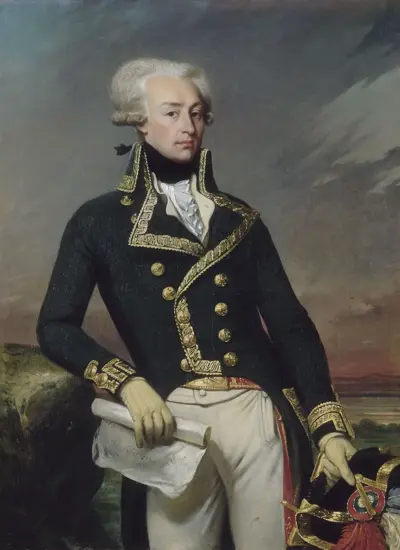
Marie-Joseph Paul Yves Roch Gilbert du Motier, Marquis de La Fayette, known in the United States as Lafayette (/ˌlɑːfiːˈɛt, ˌlæf-/, French: [lafajɛt]), was a French aristocrat and military officer who fought in the American Revolutionary War, commanding American troops in several battles, including the siege of Yorktown. After returning to France, he was a key figure in the French Revolution of 1789 and the July Revolution of 1830. He has been considered a national hero in both countries.
