Paul von Hindenburg Quotes
In the account book of the Great War the page recording the Russian losses has been ripped out. The figures are unknown. Five millions, or eight? We ourselves know not.
Hindenburg, Paul von. Out of My Life. Translated by F. A. Holt, Harper & Brothers, 1920, p. 147.


Churchill saw before many others that technology and weaponry had changed the nature of warfare. At the time the military leadership of all the major powers were pursuing 19th century tactics with 20th century weaponry including mass bayonet charges against machine guns behind barbed wire. Churchill and other civilians, although they had legal control over the military, had little de facto tactical control. As a politician he became an itinerant meddler in military tactics thereafter.


Although an ordained Methodist Minister, the Methodist Episcopal Church refused to allow her to preach.

The Congress had applauded his message vigorously.

The Ambassador of Bavaria represented an area where the politicians saw democrats and socialists as their great enemy, as did many of the leading right wing conservatives in all of Germany. They believed that a great war would give them a chance to crush democratic socialism in Europe. Bethmann warned that just the opposite might result, and indeed it did. He was correct. Many of the crowned heads of Europe were deposed and the democratic socialists emerged as a major political factor in the victorious democracies. Bethmann-Hollweg, however, was not a strong leader and could not prevent the Conservatives, the military leaders, and Kaiser Wilhelm from initiating WWI.


This was a precursor of the total war views of William Tecumseh Sherman and Ulysses S. Grant during the American Civil War half a century later.

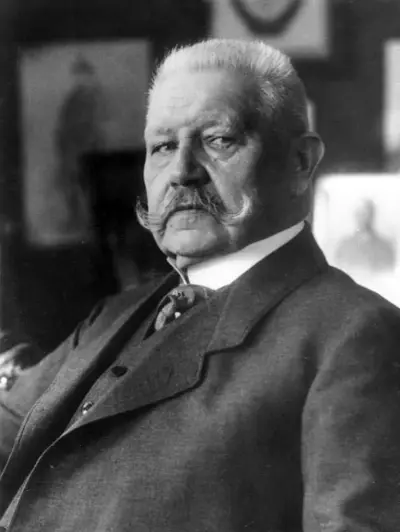
Paul Ludwig Hans Anton von Beneckendorff und von Hindenburg, was a German general and statesman who led the Imperial German Army during World War I and later became President of Germany from 1925 until his death in 1934. During his presidency, he played a key role in the Nazi seizure of power in January 1933 when, under pressure from advisers, he appointed Adolf Hitler as Chancellor of Germany.
