Alexander Suvorov Quotes
It is very difficult to do one's duty. I was considered a barbarian because at the storming of the Praga, 7,000 people were killed. Europe says that I am a monster. I myself have read this in the papers, but I would have liked to talk to people about this and ask them: is it not better to finish a war with the death of 7,000 people rather than to drag it on and kill 100,000.
This was a precursor of the total war views of William Tecumseh Sherman and Ulysses S. Grant during the American Civil War half a century later.
Alexander Vasilyevich Suvorov, 1729–1800, Russian General & Field Marshall, Statement about the Polish deaths in the storming of the fortified Praga suburb in Warsaw on October 15, 1794, during the Polish revolt, Quoted in Philip Longworth, "The Art of Victory", 1966
Sourced by: Eigen's Political and Historical Quotations

His balanced judgment and concern for American Casualties changed during the Iraq War over a decade later where he insisted on taking steady American casualties even after Saddam had been deposed and American troops were in the middle of a sectarian civil war.


The highest court in New York.


Theodore Roosevelt was the Presidential nominee. Johnson was a leader of some members of Congress some of whom were extreme isolationists and some of whom were Nazi sympathizers and Hitler admirers. When the Japanese attacked Pearl Harbor later that year, Germany, fulfilling its treaty with Japan, declared war on America, Johnson’s group no longer mattered. Before WWII most Republicans were opposed to Defense Spending and accused the Democrats of being war hawks. After WWII, they flip flopped and became more hawkish than the Democrats who they accused of being soft on defense for years thereafter. See {631380} for President Roosevelt’s different view.


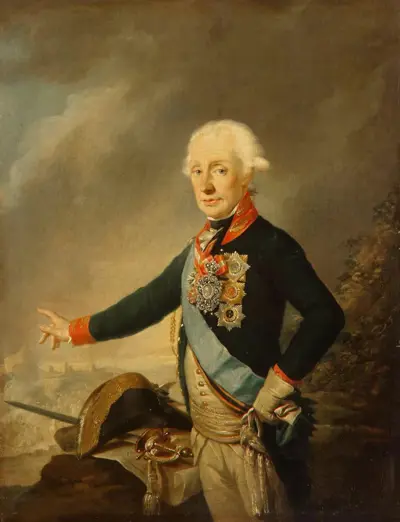
Alexander Vasilyevich Suvorov was a Russian general in service of the Russian Empire. He was Count of Rymnik, Count of the Holy Roman Empire, Prince of Italy, and the last Generalissimo of the Russian Empire. Suvorov is considered one of the greatest military commanders in Russian history and one of the great generals of the early modern period. He was awarded numerous medals, titles, and honors by Russia, as well as by other countries. Suvorov secured Russia's expanded borders and renewed military prestige and left a legacy of theories on warfare. He was the author of several military manuals, the most famous being The Science of Victory, and was noted for several of his sayings. Several military academies, monuments, villages, museums, and orders in Russia are dedicated to him. He never lost a single major battle he had commanded.
