John Stuart Mill Quotes
If the constitution of the electoral body disposes them to choose unfit persons, there are always plenty of such persons to choose from
John Stuart Mill, 1806-1873, Member of Parliament, British Political Economist, The Subjugation of Women, 1869
Sourced by: Eigen's Political and Historical Quotations

This is an important quotation because it was believed by most of the Founding Fathers and the American public until relatively recently. Presidential candidates would not think of publicly campaigning. The view was that anyone who was ambitious for power and authority should not be trusted with it. The idea was first stated by Plato and has been a major view of Western politics since. Many still believe it, but no one has come up with a practical alternative in a large jurisdiction where there is no way to know about the possible candidates without their initiative. Earlier American presidential candidates, although they did not campaign as we know it, got associates to do their campaigning for them. At Presidential nominating conventions, candidates would not even attend. Abraham Lincoln for example never attended the convention at which he got nominated, but he had associates lining up delagates and he was managing their efforts behind the scenes.


The news anchor had been asked by many, including Robert F. Kennedy, to run for public office including the U. S. Senate.


Note that early constitutional experts assumed that one of the President’s roles was to be non partisan and control partisanship. Note the phrase ‘prevent the artifices of party’. The early founders were very wary of political parties of ‘factions’ as Madison called them. However, most were extremely partisan although in the Presidency partisanship was toned down by George Washington but after him, partisan ship became the norm.


Ex HEW Secretary John Gardner, the founder of the citizens' lobby, Common Cause, was testifying before Hays' committee: Gardner, considered an excellent Secretary by most, was a reformer who was making some suggestions not to Hays’ liking. This quote was Hays’ reposponse to Gardner. Hays was not only a bully but his lack of tact caused the State Departmemt much trouble. See {622348}.
Henry, who most people remember for his 5 wives, was actually a very learned man, who wrote prose, poetry and music. He actually brought non-English learned men to his court if they had intellectual or cultural views. In addition, he was an excellent athlete and brought active sports to England.


1st Marquees of Halifax. This is a very important quotation because it still has much validity today. The “Prince” is the Monarch, King or Official Heading the State. Savile points out that if the Price does not take the time or make the effort to understand an issue and its complexity, he then must trust his advisors and their opinions rather than have any intelligent and knowledgeable views of his own. In modern times the advice applies to elected officials, executive and legislative. If they do not take time and make the effort to understand a complex issue, they cannot use their own judgment but must accept the judgment of staff, friends, colleagues, party leaders, lobbyists or members of committees who they hope are not also ignorant. In modern legislatures, there are so many different issues in so many areas, that it is very difficult to have the time to make the effort to study all the issues. This problem is compounded with politicians as they tend to spend large amounts of their time fundraising for their next election and simply do not have enough time to study issues. In the Congress for example, most members vote on bills that they have not even read and they end up trusting someone else’s judgment.

Samuel Langhorne Clemens, 1835-1910

5th Earl of Rosebery


In America there are different State laws on this subject. In some, if a person finished his sentence and paid his debt to society, he is no longer prohibited from public and political life; in others, he can no longer even vote. This was a particularly offensive thing to English women who were not allowed to vote or hold office while a male felon could serve a decade in jail and then do either.


President Roosevelt had a meeting with the then general, for the first time, and in the discussions Roosevelt felt that De Gaulle was taking too much authority upon himself and wanted to make all decisions for France that should be made by a government. Roosevelt reminded De Gaulle that he was not an elected official. Winston Churchill who was also present privately told Roosevelt that for his part he would burn him but his government wouldn’t allow it.
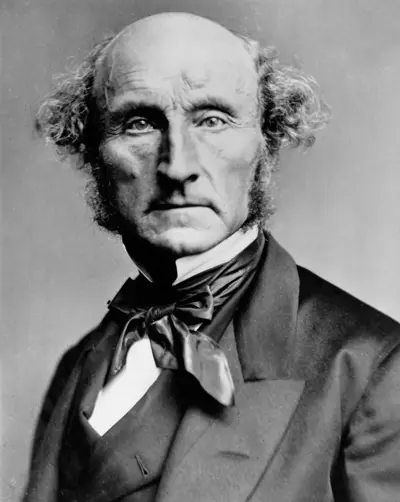
John Stuart Mill, usually cited as J. S. Mill, was an English philosopher, political economist, Member of Parliament, and civil servant. One of the most influential thinkers in the history of classical liberalism, he contributed widely to social theory, political theory, and political economy. Dubbed "the most influential English-speaking philosopher of the nineteenth century", he conceived of liberty as justifying the freedom of the individual in opposition to unlimited state and social control.
