Aristotle Quotes
A man who aspires to any high office should have three qualifications: first, he should be prepared to support the constitution of his country; second, he should have a special aptitude for the office he desires; and third, he should have virtue and justice as they are understood by his fellow citizens.
Aristotle, 384-322 BC, Greek Philosopher & Teacher, Politics, V, 343 BC
Sourced by: Eigen's Political and Historical Quotations

A conservative Calvinist weekly periodical. Just as today, there were few politicians who could stand up to such a test.

This is an important quotation because it was believed by most of the Founding Fathers and the American public until relatively recently. Presidential candidates would not think of publicly campaigning. The view was that anyone who was ambitious for power and authority should not be trusted with it. The idea was first stated by Plato and has been a major view of Western politics since. Many still believe it, but no one has come up with a practical alternative in a large jurisdiction where there is no way to know about the possible candidates without their initiative. Earlier American presidential candidates, although they did not campaign as we know it, got associates to do their campaigning for them. At Presidential nominating conventions, candidates would not even attend. Abraham Lincoln for example never attended the convention at which he got nominated, but he had associates lining up delagates and he was managing their efforts behind the scenes.


Dr. Franklin, the oldest delegate, had written his speech but was feeling too weak to present it. The other Pennsylvania delegate, James Wilson, read his speech.


Not all kings were uncaring aristocrats and a few were excellent, compassionate, rulers. Most were not however.


The first non-PRI President in over 70 years. Before Fox, the corruption of Mexican Presidents was rampant.


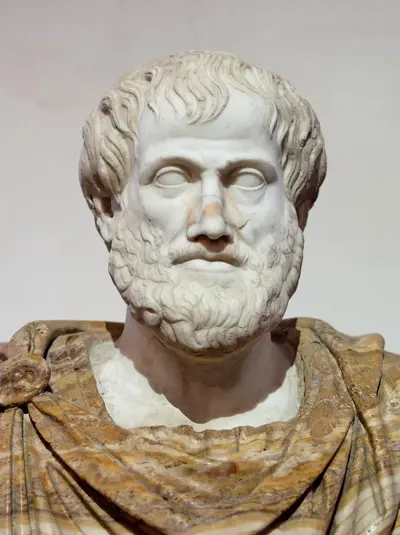
Aristotle (/ærɪˈstɒtəl/; Greek: Ἀριστοτέλης Aristotélēs, pronounced [aristotélɛːs]; 384–322 BC) was a Greek philosopher and polymath during the Classical period in Ancient Greece. Taught by Plato, he was the founder of the Lyceum, the Peripatetic school of philosophy, and the Aristotelian tradition. His writings cover many subjects including physics, biology, zoology, metaphysics, logic, ethics, aesthetics, poetry, theatre, music, rhetoric, psychology, linguistics, economics, politics, meteorology, geology and government. Aristotle provided a complex synthesis of the various philosophies existing prior to him. It was above all from his teachings that the West inherited its intellectual lexicon, as well as problems and methods of inquiry. As a result, his philosophy has exerted a unique influence on almost every form of knowledge in the West and it continues to be a subject of contemporary philosophical discussion.
