Ralph Waldo Emerson Quotes
Our people are slow to learn the wisdom of sending character instead of talent to Congress. Again and again they have sent a man of great acuteness, a fine scholar, a fine forensic orator, and some master of the brawls has crunched him up in his hands like a bit of paper.
Ralph Waldo Emerson, 1803-1882, Poet & Essayist, Journals
Sourced by: Eigen's Political and Historical Quotations


He was not re-elected to a fifth term after the Kentucky leader who would not even bet on Kentucky Horse races, was found to have been in a long-term adulterous affair with Madeline Pollard.


Nixon did not make Eisenhower’s first short list, but was finally selected.

A conservative Calvinist weekly periodical. Just as today, there were few politicians who could stand up to such a test.


The “compromise” admitted Misouri to the Union with the right to have slavery and Maine with the right to abolish slavery. The slave states had taken the position that states really had no right to abolish slavery at all, but they compromised on Maine. Many in the non slave states insisted on the aboloution of slavery everywhere, but compromised on Missouri. Luisa Adams, an implacable opponent of slavery on moral and religious grounds, condemned the compromise as politically expedient but morally bankrupt. She saw attempted compromise on the slavery issue as leading to disaster—current and future murder and degradation of human beings and postponing the issue until it would be out of hand.

Ironically, according to Plato and other political philosophers, one of the important qualifications for a leader is that he doesn’t believe that he is ready at the moment. In that sense Christie burnished his star. However, few politicians ever express any public doubt regarding their experience and qualifications.


Carlyle was of the opinion that legislators do not make good executives, managers, or leaders. Many in modern America agree.


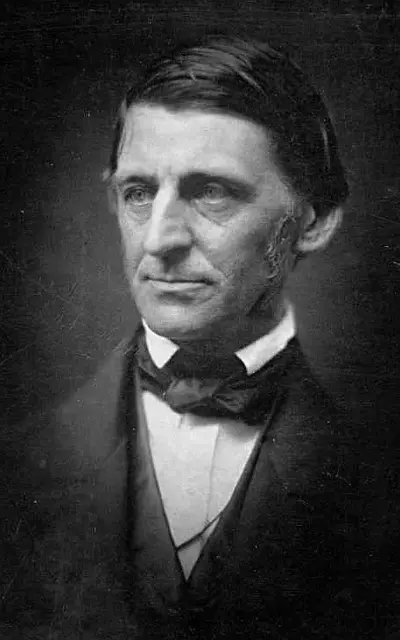
Ralph Waldo Emerson, who went by his middle name Waldo, was an American essayist, lecturer, philosopher, abolitionist and poet who led the transcendentalist movement of the mid-19th century. He was seen as a champion of individualism and a prescient critic of the countervailing pressures of society, and he disseminated his thoughts through dozens of published essays and more than 1,500 public lectures across the United States.
