Benjamin Franklin Quotes
No salaries should be allowed the public Officers, but that their necessary expenses should be defrayed. This would make Men, he said, more desirous of obtaining the Esteem of their Country-men, than avaricious or eager in the pursuit of wealth.
Dr. Franklin, the oldest delegate, had written his speech but was feeling too weak to present it. The other Pennsylvania delegate, James Wilson, read his speech.
Benjamin Franklin, 1706-1790, Governor of Pennsylvania, Member of the Continental Congress & the Constitutional Convention, Governor of Pennsylvania, President of the Pennsylvania Assembly, U.S. Minister to France, Postmaster General of the American Colonies, Argument against the Presidential veto, Speech, Constitutional Convention, June 1787, Quoted in the notes of Georgia Delegate William Leigh Pierce, ~1740-1789
Sourced by: Eigen's Political and Historical Quotations


The hearings were on indecency in broadcasting.


Many people have erroneously credited the water’s edge analogy to senator Arthur Vandenberg who made the same point very effectively in 1950. See {36673}.


See Charles James Fox, John Milton, Jeremy Bentham, George Mason, Henry Clay, Benjamin Disraeli and Woodrow Wilson for similar expressions of this idea.


See Charles James Fox, John Milton, Jeremy Bentham, George Mason, Grover Cleveland, Benjamin Disraeli and Woodrow Wilson for similar expressions of this idea.

Referring to White House Chief of Staff Donald T. Regan who had resigned under pressure:


Discussing alleged meager compensation for public service:

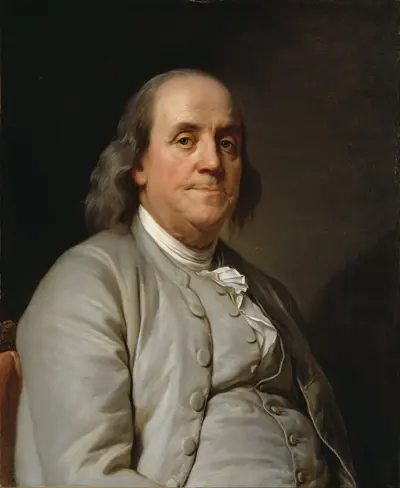
Benjamin Franklin FRS FRSA FRSE was one of the Founding Fathers of the United States. A polymath, he was a leading writer, printer, political philosopher, politician, Freemason, postmaster, scientist, inventor, humorist, civic activist, statesman, and diplomat. As a scientist, he was a major figure in the American Enlightenment and the history of physics for his discoveries and theories regarding electricity. As an inventor, he is known for the lightning rod, bifocals, and the Franklin stove, among other inventions. He founded many civic organizations, including the Library Company, Philadelphia's first fire department, and the University of Pennsylvania.
