Thomas More Quotes
King Henry VIII has more learning than any English monarch ever possessed before him. What may we not expect from a king who has been nourished by philosophy and the nine Muses?
Henry, who most people remember for his 5 wives, was actually a very learned man, who wrote prose, poetry and music. He actually brought non-English learned men to his court if they had intellectual or cultural views. In addition, he was an excellent athlete and brought active sports to England.
Thomas More, 1478-1535, Speaker of the House of Commons, Lord Chancellor of England, Description of King Henry VIII
Sourced by: Eigen's Political and Historical Quotations

Not all kings were uncaring aristocrats and a few were excellent, compassionate, rulers. Most were not however.


As soon as the king dies, his successor is immediately vested in the rights, duties, and prerogatives of the king.
The Princess was Victoria who was to become the Sovereign of England but at the time was only 11 years old. The Duchess was her mother and guardian and responsible for her upbringing and education. However, note that because a future sovereign was involved, the official Church of England was required by the existing law to provide oversight to her upbringing, and this memo was one of the Duchess’s periodic report to the Church. Also it is interesting that this young princess, destined to be the most powerful person in the world at the time, was brought up to “live for others” and not to be pompous or dazzled with power. The Duchess did a terrific job because not only was Victoria to reign over the British Empire for 62 years, but Queen Victoria is regarded by many historians as one of the best, if not the best, monarch who ever reigned anywhere.

The speech was never actually delivered, but instead the Bishop published it. It received wide distribution including in America where it was published by the Maryland Gazette on September 29, 1774.


This is an important quotation because it was believed by most of the Founding Fathers and the American public until relatively recently. Presidential candidates would not think of publicly campaigning. The view was that anyone who was ambitious for power and authority should not be trusted with it. The idea was first stated by Plato and has been a major view of Western politics since. Many still believe it, but no one has come up with a practical alternative in a large jurisdiction where there is no way to know about the possible candidates without their initiative. Earlier American presidential candidates, although they did not campaign as we know it, got associates to do their campaigning for them. At Presidential nominating conventions, candidates would not even attend. Abraham Lincoln for example never attended the convention at which he got nominated, but he had associates lining up delagates and he was managing their efforts behind the scenes.


He was executed for rebellion at age 29. However, a number of his followers went on to leadership positions in the reforms that followed.


Windsor was the Kings palace and the King felt that was all he really controlled.

Referring to the totally inadequate diplomatic communications in the political confusion and crises that led up to the First World War. None of the countries really wanted a large war, but the diplomatic communications were so bad that all operated on the assumption that the others were moving against them and they had to defend themselves or their treaty allies and there were very few opportunities to discern what other countries would do and all of Europe and much else of the world slipped out of control.


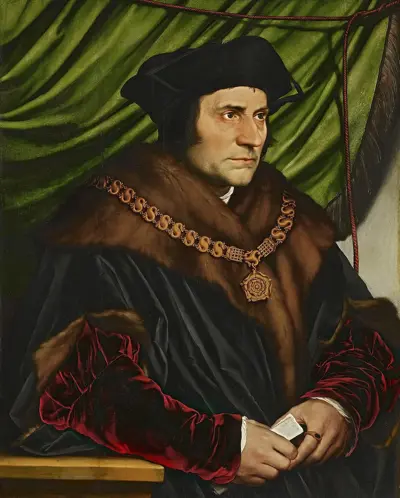
Sir Thomas More, venerated in the Catholic Church as Saint Thomas More, was an English lawyer, judge, social philosopher, author, statesman, and noted Renaissance humanist. He also served Henry VIII as Lord High Chancellor of England from October 1529 to May 1532. He wrote Utopia, published in 1516, which describes the political system of an imaginary island state.
