Napoleon Bonaparte Quotes
A King should sacrifice the best affections of his heart for the good of his country; no sacrifice should be above his determination.
Bonaparte, Napoleon. Political Aphorisms, Moral and Philosophical Thoughts of the Emperor Napoleon. Edited by G. de Liancourt, T.C. Newby, 1848.


Ataturk was a young major at the time commanding troops of a weak and corrupt Ottoman regime. However a combined English and French (the strongest military powers in Europe) invasion of the Gallipoli Peninsula threatened to capture the Turkish capital, Constantinople. Ataturk alone rallied the Turkish defenders and fought the invaders to a standoff in long drawn out battle with huge casualties on both sides. Ataturk became a national hero. Although Ataturk thereafter was very reluctant to use military force or endanger troops, the thing he always thought worth the supreme sacrifice (including his own) was the independence and sovereignty of the nation. See {584502} for his continuing belief in this type of sacrifice.

Historically almost all dictators seized their power and war criminals committed their murders to “save their nation.”


Lord Murray had decided to support Prince Charles in his attempt to seize the Scottish Crown. His statement is one of the great examples of self-interest yielding to principles. Note that the capitalization of “King” and “Country” are the Lord’s and reflects the majesty that these words then reflected.


She was 18 years old at the time. She was England’s longest reigning monarch and a model studied by other monarchs, the world over.


The Emperor had made his brother King of Holland to function as a French military Governor. But Louis Napoleon. Who took an oath as the King of Holland, took his oath and responsibilities seriously and tried to serve Dutch interests which his brother cared for not at all. Louis Napoleon had an impossible situation with dual loyalty that was incompatible.


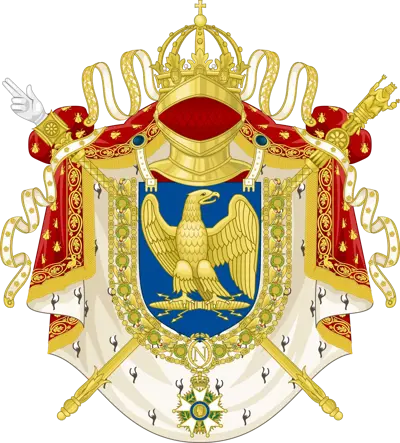
Napoléon Bonaparte was a French military and political leader of Corsican descent. He rose to prominence during the French Revolution and led several successful campaigns during the Revolutionary Wars. As Napoleon I, he was Emperor of the French from 1804 until 1814, and again in 1815. Napoleon dominated European and global affairs for more than a decade while leading France against a series of coalitions in the Napoleonic Wars. He won most of these wars and the vast majority of his battles, building a large empire that ruled over continental Europe before its final collapse in 1815. One of the greatest commanders in history, his wars and campaigns are studied at military schools worldwide. He remains one of the most celebrated and controversial political figures in human history.
