Christopher Gadsden Quotes
If my acceptance of the office of Governor would serve my country, though my administration would be attended with the loss of personal credit and reputation, I would cheerfully undertake it.
Ramsay, David. The History of the Revolution of South-Carolina, from a British Province to an Independent State. Vol. 2, Isaac Collins, 1785, p. 349.


She was 18 years old at the time. She was England’s longest reigning monarch and a model studied by other monarchs, the world over.


This may be Kennedy’s most famous line. However he was not the first orator to express this idea however. See Khalil Gibran {601423}, Warren G. Harding {622594} and {629021}, St. John Broderick {595734}, and Oliver Wendell Holmes Jr. {603707} for earlier expressions of similar sentiments. Holmes seems to be the first to express the idea while the earliest seems similar phraseology seems to be the British Politician St. John Broderick in 1893 {595734}. Although, these earlier expressions existed, Theodore C. Sorensen, who assisted Kennedy with this speech and wrote the draft, had distilled it from earlier expressions and views of JFK and said that these were Kennedy’s words. At the time, he stated that was unaware of the Gibran, Harding, Broderick and Holmes sentiments. Gibran had not yet even been translated into English. However it is not clear whether Kennedy himself had inadvertently recollected the phrase from any of the other quotations. (The question was never put to him.) The St. John Broderick quotation is a possible source. Kennedy was quite familiar with British political history, and his father and been U. S. Ambassador to Great Britain. Regardless, the quotation was as great for the place and timing—his inaugural—as it was for the phraseology which might have originated elsewhere.


Historically almost all dictators seized their power and war criminals committed their murders to “save their nation.”

Ataturk was a young major at the time commanding troops of a weak and corrupt Ottoman regime. However a combined English and French (the strongest military powers in Europe) invasion of the Gallipoli Peninsula threatened to capture the Turkish capital, Constantinople. Ataturk alone rallied the Turkish defenders and fought the invaders to a standoff in long drawn out battle with huge casualties on both sides. Ataturk became a national hero. Although Ataturk thereafter was very reluctant to use military force or endanger troops, the thing he always thought worth the supreme sacrifice (including his own) was the independence and sovereignty of the nation. See {584502} for his continuing belief in this type of sacrifice.

The Society of Cincinnati was formed just after the Revolutionary War by officers of the army, to perpetuate friendships, to aid each other and the widows and orphans of members, and to honor their French allies and comrades:
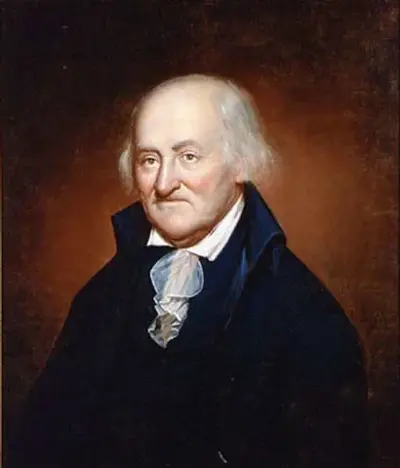
Christopher Gadsden was the principal leader of the South Carolina Patriot movement during the American Revolution and a soldier, politician and slave owner from South Carolina. He was a delegate to the Continental Congress, a brigadier general in the Continental Army during the American Revolutionary War, Lieutenant Governor of South Carolina, a merchant, and the designer of the Gadsden flag.
