Murray Kempton Quotes
There are things a man must not do to save a nation.
Historically almost all dictators seized their power and war criminals committed their murders to “save their nation.”
Murray Kempton, 1917-1997, Journalist & Commentator, America Comes of Middle Age, 1963
Sourced by: Eigen's Political and Historical Quotations


The following day she was assassinated.


Ataturk was a young major at the time commanding troops of a weak and corrupt Ottoman regime. However a combined English and French (the strongest military powers in Europe) invasion of the Gallipoli Peninsula threatened to capture the Turkish capital, Constantinople. Ataturk alone rallied the Turkish defenders and fought the invaders to a standoff in long drawn out battle with huge casualties on both sides. Ataturk became a national hero. Although Ataturk thereafter was very reluctant to use military force or endanger troops, the thing he always thought worth the supreme sacrifice (including his own) was the independence and sovereignty of the nation. See {584502} for his continuing belief in this type of sacrifice.


LBJ was depressed and thinking of not running for re-election.

Lord Murray had decided to support Prince Charles in his attempt to seize the Scottish Crown. His statement is one of the great examples of self-interest yielding to principles. Note that the capitalization of “King” and “Country” are the Lord’s and reflects the majesty that these words then reflected.

Bassi was one of the unique military chaplains in history. Instead of just ministering to the men spiritually, he marched at the head of the Italian revolutionary Army and was wounded in combat. Although he never carried arms, he was executed along with those who did.


“Volk” loosely translated means “the people.” However it carries the connotation of a unity that “the people” does not.

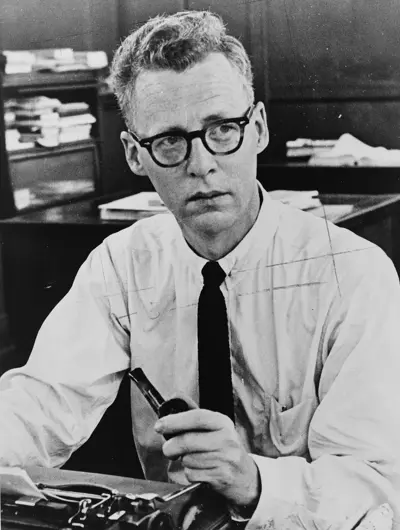
James Murray Kempton was an American journalist and social and political commentator. He won a National Book Award in 1974 (category, "Contemporary Affairs") for The Briar Patch: The People of the State of New York versus Lumumba Shakur, et al. Reprinted, 1997, with new subtitle The Trial of the Panther 21. He won a Pulitzer Prize (category, "Commentary") in 1985 "for witty and insightful reflection on public issues in 1984 and throughout a distinguished career."
