Richard III of England Quotes
Not one foot will I fly, so long as breath bides within my breast; for, by Him that shaped both sea and land, this day shall end my battles or my life. I will die King of England.

At that point the Japanese were losing the war on every front. It is not clear whether Hirohito would actually have done such and not tried to escape in the end, however he certainly expected his subjects, military and civilian to do so. That expectation and the behavior of the Japanese troops fighting to the death on many islands was a powerful factor in leading Truman, Marshall and other key American leaders to use the Atomic Bomb. See Marshall: {641063}

A Federal Naval flotilla was preparing to attack South Carolina Forts Beauregard and Walker in the area of Hilton Head and Port Royal. The navy took both forts the next day with their naval bombardment so powerful that the Confederate Rebels had to abandon both forts gaining a kind of revenge for the Confederate capture of Fort Sumter at the war’s beginning.


He always appeared in a military uniform after that.


Ataturk was a young major at the time commanding troops of a weak and corrupt Ottoman regime. However a combined English and French (the strongest military powers in Europe) invasion of the Gallipoli Peninsula threatened to capture the Turkish capital, Constantinople. Ataturk alone rallied the Turkish defenders and fought the invaders to a standoff in long drawn out battle with huge casualties on both sides. Ataturk became a national hero. Although Ataturk thereafter was very reluctant to use military force or endanger troops, the thing he always thought worth the supreme sacrifice (including his own) was the independence and sovereignty of the nation. See {584502} for his continuing belief in this type of sacrifice.
Ataturk had been a military hero, but was very much opposed to war and military adventurism not unlike the Dwight Eisenhower and Colin Powell type leaders. However, the one thing that he thought worth the sacrifice of his own and other Turkish lives was Turkish independence and sovereignty. Historically, the Ottoman Empire which Ataturk finally ended, had dominated half of Europe and all of the Mid East at the cost of sovereignty of other nations and Ataturk saw no more important virtue with dying for than national sovereignty. See {125322} and {584501}.


Joseph Addison had earlier written of such a situation. Recent research has strongly suggested that Hale may never have said these words. The American patriots wanted to have heroes and may not have been too worried about the documentation and historical research. See {621112}

His documentation of Bushido—the way of the warrior—has influenced Japanese culture and behavior even into modern times. This statement in large part explained the behavior of Japanese troops in WWII. Surrender was considered cowardice and therefore fighting to the death was required of all Japanese. This particular work was studied by American experts on Japan and the assumption that this was the Japanese cultural imperative for soldier and civilian alike, was one of the major factors leading Truman and America to use the Atomic bomb in WWII for they did not anticipate any Japanese surrender otherwise and an invasion of the Japanese mainland would have killed more Japanese and many Americans as well. Even after the first atomic bomb on Hiroshima, the Japanese would not surrender and it took the Emperor to finally contradict the Japanese culture as stated in Yamamoto Tsunetomo’s writing. See also {586232}.


Compare Nathan Hale's last words.

Adams, after his presidency, served in the House of Representatives for many years. He collapsed at his desk in the House and died in the Speaker’s office.


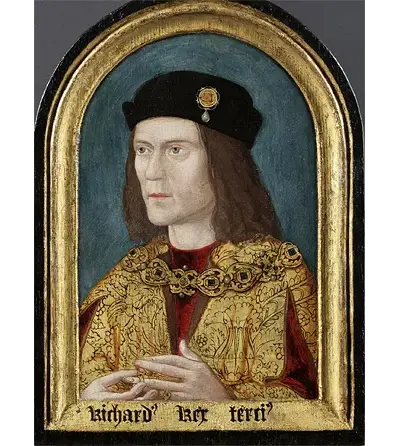
Richard III was King of England and Lord of Ireland from 1483 until his death in 1485. He was the last king of the House of York and the last of the Plantagenet dynasty. His defeat and death at the Battle of Bosworth Field, the last decisive battle of the Wars of the Roses, marked the end of the Middle Ages in England. He is the protagonist of Richard III, one of William Shakespeare's history plays.
