Ambrose Bierce Quotes
It is very rarely that a man of brains, honor and good manners gets into public life. In most instances the man who holds an office is a rogue, a vulgarian or an ignoramus; commonly he is all three.
Ambrose Bierce, 1842-1914?, Journalist & Political Columnist, Wasp, January 13, 1883
Sourced by: Eigen's Political and Historical Quotations


This book was the first popular attempt to spread the eugenics concept. Is was translated into German in 1925 and unfortunately read by Adolf Hitler who sent Grant a complimentary letter. See {603544} and {602054}


A conservative Calvinist weekly periodical. Just as today, there were few politicians who could stand up to such a test.


This is an important quotation because it was believed by most of the Founding Fathers and the American public until relatively recently. Presidential candidates would not think of publicly campaigning. The view was that anyone who was ambitious for power and authority should not be trusted with it. The idea was first stated by Plato and has been a major view of Western politics since. Many still believe it, but no one has come up with a practical alternative in a large jurisdiction where there is no way to know about the possible candidates without their initiative. Earlier American presidential candidates, although they did not campaign as we know it, got associates to do their campaigning for them. At Presidential nominating conventions, candidates would not even attend. Abraham Lincoln for example never attended the convention at which he got nominated, but he had associates lining up delagates and he was managing their efforts behind the scenes.


See Charles James Fox, John Milton, Jeremy Bentham, George Mason, Grover Cleveland and Woodrow Wilson for similar expressions of this idea.


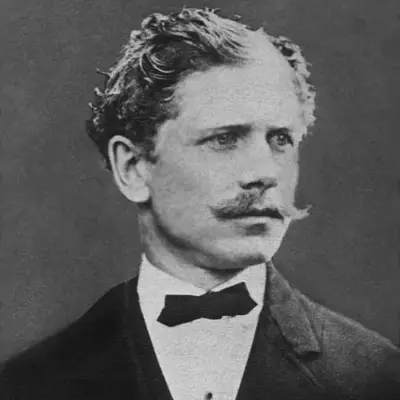
Ambrose Gwinnett Bierce was an American short story writer, journalist, poet, and Civil War veteran. His book The Devil's Dictionary was named as one of "The 100 Greatest Masterpieces of American Literature" by the American Revolution Bicentennial Administration. His story "An Occurrence at Owl Creek Bridge" has been described as "one of the most famous and frequently anthologized stories in American literature"; and his book Tales of Soldiers and Civilians (also published as In the Midst of Life) was named by the Grolier Club as one of the 100 most influential American books printed before 1900.
