Assyria Quotes
If a woman, who is a widow, enter into the house of a man, whatsoever she brings with her---all is her husband's. But if a man enter in to a woman’s house, whatsoever he brings---all is the woman's
Assyrian Legal Code, The Code of the Assura, ~ 1075 BC
Sourced by: Eigen's Political and Historical Quotations

Even into the 20th Century in some states women could not inherit property if there was a male child.

Manava Dharma Shastra. 500 years before Christ, the Hindus took more official care of females’ property than we and most European cultures did until relatively modern times. In Anciend India, women could inherit and own property, but because of their relative inexperience and no education, they were taken advantage of by relative who were “managing affairs” for them. This text is a part of the Hindu Holy Texts. Hindus believe that Manu was a prophet whose text is revealed or inspired.


At the time the law in the United States gave a husband control of all property of the wife including any money she might earn. In this sense the English Christian legal tradition was far less fair and modern than even Islam which guaranteed some property and inheritance rights to women.

Even as suave and sophisticated man as JFK was unsure of proper behavior with women involved in politics in the 1950s. In a way, this quotation shows us how far we have come in the half century following Kennedy’s statement.

Many of the most liberated and accomplished women in history have been from wealthy families. And yet with all their money they could only go so far. They needed an entire movement of women of all classes—and men to finally attain suffrage and the progress made thus far. Wealthy women were very active, alongside with working and middle class women in most of the demonstrations and campaigns for women’s rights.

Mrs. Roosevelt thought that with the rate of improvement in society’s perception and treatment of women was improving so steadily that women in America were not far from equality. Because of the shortage of men on the home front in WWII women had performed well in virtually all occupations including welding, heavy construction and management and it was just a matter of time to reach equality of pay and parity. However, she and most feminists did not take into account the 2 million men returning from military service who wanted their jobs back. Sexists, who had been suppressed during the war when they objected to women in non traditional occupations, were no longer silenced by national necessity. An occupational backlash developed. Then a sexual one regarding contraception and family planning, (Condoms for example were illegal up to 1963 as birth control device). Each major step forward was accompanied by its own backlash and even in the Presidential Campaign of 2012 contained debate on women’s control over their own bodies relative to abortion and contraception.


In Bedouin society women may not own land or cattle.


At the time, in many states married women could not control their own inheritance, could not sign a contract, owned no part of a family business that a women might have founded and worked in her entire life, could not be an executor of a will—even if it were her husband’s.


A fief was an estate of land and people. The man who had the title to the fief was obligated to raise troops from his estates and lead then at the command of the King. Women, under English law could not inherit a fief—it went to the oldest son. However, once the military element of fiefdom was eliminated, Johnson saw no reason why women should no longer inherit feifs and the titles that went with them.


This proverb is a large part of the conceptual basis of the concept of honor killing. It starts with the notion that women are property. However, being animate property women are in the same class as livestock. And if a camel or a donkey get lose and does damage, the owner is responsible. So if a woman does something wrong, it is the father or the husband who is responsible. Since sexual behavior of most kinds is contrary to the Islamic custom and law, any activity in this regard, demonstrates that the father of husband has not been up to his obligations and is therefore dishonored. Therefore, the least he can do, to provide a deterrent to other women is to kill the offending female. Without the concept of property, the entire chain of logic collapses under its own weight.

See {618590} for an example of the kinds of issues which motivated her statement.
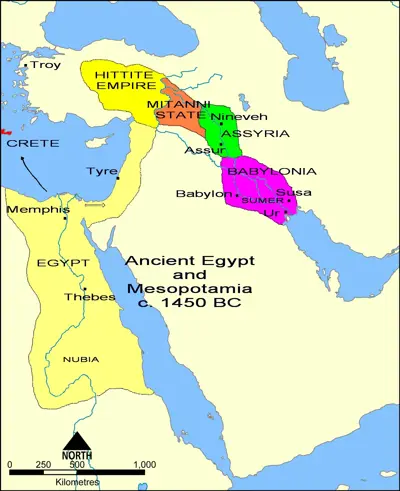
Assyria (/əˈsɪriə/), also called the Assyrian Empire, was a Mesopotamian kingdom and empire of the Ancient Near East that existed as a state from perhaps as early as the 25th century BCE (in the form of the Assur city-state) until its collapse between 612 BCE and 609 BCE; thereby spanning the periods of the Early to Middle Bronze Age through to the late Iron Age. This vast span of time is divided into the Early Period (2500–2025 BC), Old Assyrian Empire (2025–1378 BCE), Middle Assyrian Empire (1392–934 BCE) and Neo-Assyrian Empire (911–609 BCE).
