Samuel Johnson Quotes
When fiefs inspired military service, it is easily discerned why females could not inherit them; but the reason is at an end.
A fief was an estate of land and people. The man who had the title to the fief was obligated to raise troops from his estates and lead then at the command of the King. Women, under English law could not inherit a fief—it went to the oldest son. However, once the military element of fiefdom was eliminated, Johnson saw no reason why women should no longer inherit feifs and the titles that went with them.
Samuel Johnson, 1709-1784, English Writer & Lexicographer, Quoted in Thomas Wentworth Higginson, Women and The Alphabet, 1881
Sourced by: Eigen's Political and Historical Quotations

Marcus Porcius Cato. This quotation has had two different interpretations over time. One was that women if they received equality of treatment and voting would have an advantage for they also had their traditional “feminine wiles” and their sexuality, hence would dominate men. The second was a also a warning but based on the fact that women were superior in many ways, and given an equal chance, would excel men. The later interpretation is argued by some who point to the 2011 American data that shows more females than males graduating from high school and college, and females outnumber males in medical, law and several other professional schools. With the exception of a few Roman men, most heeded Cato’s warning and never took a chance on female equality.


Primogeniture is the system where property is inherited from the father to the first born son. At the time women could not own property unless they were widows. It is the basis of most aristocracies. See {627010} for an American view of primogeniture that was stated a little earlier.
He served a jail sentence in Britain for inciting race hatred.


Chivalry was a set of rules that regulated the behavior of knights especially as to their behavior in battle. It was the Medieval equivalent of the Geneva Convention. At the time knights fought against knights and peasants fought against peasants. After time the fighting was mixed. Previously, if a knight was subdued by other knights, he would surrender and promise to fight any more and that would be honored. But when a small group of peasants brought down a knight in armor, he could not surrender. He had probably killed other lightly armored peasants who were friends, and the peasants did not trust the knights. So typically, the peasants just killed the fallen knight. Social class determined the concepts of honor, fairness, trust, and chivalry came to an end.

Abbot was apparently ignorant of the American women who did fight in the American Revolution, the War of 1812 or the Civil War where there were a few women who fought on both sides some of whom were decorated. Nor did he seem to acknowledge Joan of Arc and other female warriors in world history. But he would be truly shocked by the tens of thousands of “civilized” women who volunteered and served in the American military once they were allowed to do so and the “civilized” men who fought with them as compatriots.


Much of the culture of sexism and racism is perpetuated by language—especially the language of leaders, role, models, and authority figures. “Political correctness” cannot, in a free society, be enforced on anyone. However, making people aware of the implication of certain kinds of language usage is important provided it doesn’t cross the line of curtailing freedom of speech. People who want to perpetuate sexism by their choice of language have the right to do so in America. What is sad, however is the many people who are perpetuating sexism without ever intending to do so. Abdul-Jabbar has been a leader who has made many male sports figures more aware if the implications of their language usage.

Mill was one of the early thinkers to realize that gender discrimination was not only unfair to women, but was a barrier to progress for the whole society including the men.

She was opposed to women accepting so called chivalrous behavior by men. Many women were reluctant to give up the few advantages that they did have.

Even as suave and sophisticated man as JFK was unsure of proper behavior with women involved in politics in the 1950s. In a way, this quotation shows us how far we have come in the half century following Kennedy’s statement.


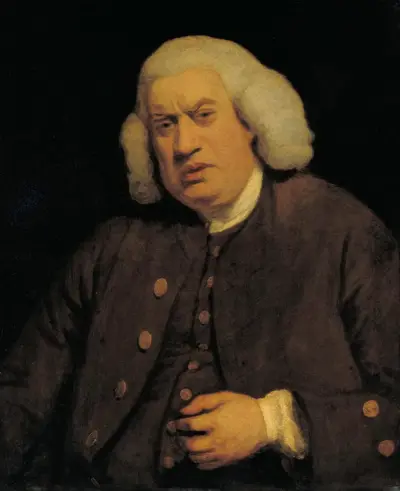
Samuel Johnson, often referred to as Dr Johnson, was an English writer who made lasting contributions to English literature as a poet, playwright, essayist, moralist, literary critic, biographer, editor, and lexicographer. Religiously, he was a devout Anglican, and politically a committed Tory. The Oxford Dictionary of National Biography describes Johnson as "arguably the most distinguished man of letters in English history". He is the subject of James Boswell's The Life of Samuel Johnson, described by Walter Jackson Bate as "the most famous single work of biographical art in the whole of literature".
