Manu Quotes
Care must be taken of barren women, of those who have no sons, of those whose family is extinct, of wives and widows faithful to their lords, and of women afflicted with diseases. A righteous king must punish like thieves those relatives who appropriate the property of such females during their lifetime.
Manava Dharma Shastra. 500 years before Christ, the Hindus took more official care of females’ property than we and most European cultures did until relatively modern times. In Anciend India, women could inherit and own property, but because of their relative inexperience and no education, they were taken advantage of by relative who were “managing affairs” for them. This text is a part of the Hindu Holy Texts. Hindus believe that Manu was a prophet whose text is revealed or inspired.
Manu, ~ 500 BC, Hindu Teacher from India, Laws of Manu
Sourced by: Eigen's Political and Historical Quotations


Manava Dharma Shastra. This text is a part of the Hindu Holy Texts. Hindus believe that Manu was a prophet whose text is revealed or inspired.
Manava Dharma Shastra. This legal principle is operative in every one of the United States to this day, the only difference being a longer period of time. This text is a part of the Hindu Holy Texts. Hindus believe that Manu was a prophet whose text is revealed or inspired.
Manava Dharma Shastra. This text is a part of the Hindu Holy Texts. Hindus believe that Manu was a prophet whose text is revealed or inspired.
Manava Dharma Shastra. This text is a part of the Hindu Holy Texts. Hindus believe that Manu was a prophet whose text is revealed or inspired.
Manava Dharma Shastra. This text is a part of the Hindu Holy Texts. Hindus believe that Manu was a prophet whose text is revealed or inspired.


This proverb is a large part of the conceptual basis of the concept of honor killing. It starts with the notion that women are property. However, being animate property women are in the same class as livestock. And if a camel or a donkey get lose and does damage, the owner is responsible. So if a woman does something wrong, it is the father or the husband who is responsible. Since sexual behavior of most kinds is contrary to the Islamic custom and law, any activity in this regard, demonstrates that the father of husband has not been up to his obligations and is therefore dishonored. Therefore, the least he can do, to provide a deterrent to other women is to kill the offending female. Without the concept of property, the entire chain of logic collapses under its own weight.

Samuel Langhorne Clemens, 1835-1910

The law at that time gave a married woman almost no rights. The husband legally controlled the family assets regardless of who had earned or provided them. He aslo had absolute control of the upbringing of the children. Women could not vote and in many states were considered property of the husband.


In this famous declaration, Stanton summarized the relative status of men and women in the society at that time. Women then could not control their own property, have their own money. “Chastisement” referred to the fact that a husband could then legally discipline his wife physically and beat her if she were not suvviciently obedient.


The feminists were split at the time over the issue of special protective labor laws for women which were different and more protective than those for men. The women received the added protection but the logic behind the lawmaking was that they were somehow less than the male workers and needed more protection. Between the 1920s and the 1960s, such labor laws for women were common, but they have mostly disappeared. See Bell-Richards {618512} for a succinct statement of the issue at the time.

Vladimir Lenin. This is a classic Lenninism where he argues that the basic principles of Communism solve all problems. He never explains how the abolition of private property would lead to female freedom and independence. Nor is this point argued by other Marxist advocates. It was an almost knee-jerk opportunistic reaction not unlike modern conservatives for whom lower taxes are the cure for all ills. The fact that married women were considered the private property of their husbands was amenable to much less drastic solutions than the elimination of private property. Indeed, we have simply abolished wives from the property class and left other property private.


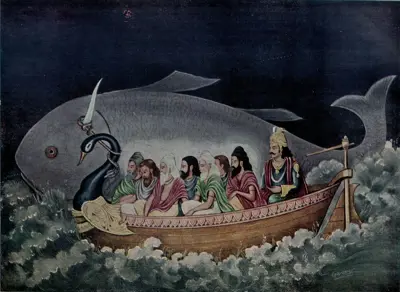
Manu (Sanskrit: मनु) is a term found with various meanings in Hinduism. In early texts, it refers to the archetypal man, or to the first man (progenitor of humanity). The Sanskrit term for 'human', मानव (IAST: mānava) means 'of Manu' or 'children of Manu'. In later texts, Manu is the title or name of fourteen mystical Kshatriya rulers of earth, or alternatively as the head of mythical dynasties that begin with each cyclic kalpa (aeon) when the universe is born anew. The title of the text Manusmriti uses this term as a prefix, but refers to the first Manu – Svayambhuva, the spiritual son of Brahma.
