Lucy Stone Quotes
… personal independence and equal human rights can never be forfeited, except for crime; that marriage should be an equal and permanent partnership, and so recognized by law; that until it is so recognized, married partners should provide against the radical injustice of present laws, by every means in their power...
The law at that time gave a married woman almost no rights. The husband legally controlled the family assets regardless of who had earned or provided them. He aslo had absolute control of the upbringing of the children. Women could not vote and in many states were considered property of the husband.
Lucy Stone, 1818-1893, Founder, National American Woman Suffrage Association, Founder, Women's Journal, Marriage protest May 1, 1855, A statement written and signed by Lucy Stone and signed by Henry Blackwell prior to their marriage. The Rev. Thomas Wentworth Higginson read the statement at the ceremony, and also distributed it to other ministers
Sourced by: Eigen's Political and Historical Quotations

The deed was made out in the name of her husband followed by the phrase “et ux”. That is a legal abbreviation for “et uxor” which literally means “and wife”. It was in use in English and American law from the time that married women had no right to property and the wife was a mere appendage to the husband. It is still recognized as a proper form by the law of many states.

This relatively radical viewpoint regarding equal rights for women was expressed by Roosevelt as his Senior thesis at Harvard in 1880. In those days, the kind of scrutiny of everything a candidate ever wrote or said that is characteristic of modern politics, did not exist. It is very doubtful that if the Republican Party officials had ever known that he had espoused these views—even as a young student, that he ever would have risen so high in the party, much less get nominated at the Vice Presidential candidate which was his entree to the Presidency. When in office however, there is no record of him reviving his youthful proposal that women who marry retain their maiden names.


At the time, in many states married women could not control their own inheritance, could not sign a contract, owned no part of a family business that a women might have founded and worked in her entire life, could not be an executor of a will—even if it were her husband’s.


The case was a protest against the 1921 law which gave equal rights to women of Wisconsin. See {587976}.

Women were not, in the decisions of Canadian courts “Persons.” As such they were not allowed to serve as public officials and legislators. In 1929 the Judicial Committee of the Privy Council reversed previous interpretations and declared women eligible for all public offices. It became known as “The Persons Case.” Murphy then wrote her argument. Murphy wrote serious non-fiction under her own name and novels under the pseudonym Janey Canuck.

For a similar application of the law to all see the Massachusetts Body of Liberties over a century earlier.


What made this quotation very dramatic was that the state of Virginia, under the previous administration dominated by religious fundamentalists had passed a law banning same sex marriage. Several private Virginia citizens had sued the State in Federal Court, asserting that their Constitutional rights were violated by the ban. The Attorney general normally defends the state in any court proceeding. However, Herring agreed with the plaintiffs on the case, that the Virginia law was unconstitutional, so he and the State entered the case on the side of the plaintiffs and against the state law. His reference to the right side of history was related to the fact that as late as 1964 Virginia had a law prohibiting interracial marriage which they enforced and the Supreme Court invalidated. Thus, on marriage, Virginia had a track record of being on the wrong side of history and the law.


Prevented by the Military from ever taking office


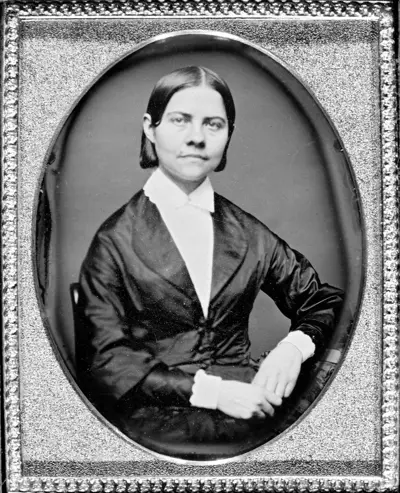
Lucy Stone was a prominent U.S. orator, abolitionist, and suffragist, and a vocal advocate and organizer promoting rights for women. In 1847, Stone became the first woman from Massachusetts to earn a college degree. She spoke out for women's rights and against slavery. Stone was known for using her birth name after marriage, the custom being for women to take their husband's surname.
