Rheta Childe Dorr Quotes
My first protest is against classing grown women with children under the law. Practically all laws limiting hours of work, prohibiting night work, and providing for a minimum wage are enacted for women and minors. I say "practically" just to be on the safe side. As a matter of fact, it is the routine thing to class woman labor with child labor
The feminists were split at the time over the issue of special protective labor laws for women which were different and more protective than those for men. The women received the added protection but the logic behind the lawmaking was that they were somehow less than the male workers and needed more protection. Between the 1920s and the 1960s, such labor laws for women were common, but they have mostly disappeared. See Bell-Richards {618512} for a succinct statement of the issue at the time.
Rheta Childe Dorr, 1866–1948, Journalist, "Should There Be Labor Laws for Women? No, Says Rheta Childe Dorr; Yes, Says Mary Anderson," Good Housekeeping, September 1925
Sourced by: Eigen's Political and Historical Quotations

See {618590} and {618512} for more on the issue of special protective legislation for women in the workplace.

See {618590} for an example of the kinds of issues which motivated her statement.

Prior to WWII there were few women in the labor force, and the traditional “values” of American society relegated women to be homemakers. However with so many men under arms, there were not enough workers to achieve the war production that was necessary. So changes had to be made in public attitudes, not only towards women working, but the nature of the work that they are capable of and ought to be doing. So the government took a proactive role in changing public attitudes towards women in the workforce. It was a successful effort, and the sociological and psychological effects are still felt, half a century later. See {584781}.


Labor reform was a burning issue in most of the industrialized countries of the world. The two areas that legislation was under consideration all over were working hours and child labor. There were no overtime provisions, employers were free to require workers to work 7 days for as many hours as they wanted. There were no limitations on the use of child labor. This is one of the classic conservative oppositions to these reforms. Ironically to us today, those against reform argued that it was disrespectful of the working man to take away his freedom to work whatever hours he so chose, and it was disrespectful of the workers role as a head of family to decide for him when and under what conditions his children could work. Germany at the time was a very dramatic example of the struggle as the Chancellor was opposed to all labor reform and Kaiser Wilhelm II felt that reforms were needed. The two most powerful Germans were split on this issue as were people in most countries.

Miller was the first Black American admitted to a Graduate Program—Johns Hopkins—in Mathematics. Women were not then universally allowed to vote and suffrage was a major issue. Miller, like many Black males, was opposed to female suffrage. The prospect of many women holding public office was to him so absurd that the potential prospect was sufficient to oppose women voting.

This is the earliest surviving attempt of the Romans to formulate a legal code.


Women were needed in industry and the military. See {584783}.
This quotation is an example of how even sophisticated institutions and leaders were plagued by various stereotypes. Dean Sperry as well as many other members of the clergy actually believed that women would not go to divinity school because they were interested in the theology but because they were looking to marry a minister. When the dean told the trustees that he had “no wisdom on this matter” is was one of the great understatements in the history of quotations. What is more ironic is that the Dean was considered very liberal having admitted Catholics, Nazarenes, and Adventists.


Sharie is the Islamic code of law based on the Koran which is so brutal that they would stone a woman to death who had illicit sex or kill someone who wanted to change his religion.


This is one of the biblical passages which cause some Christian Fundamentalists to prescribe a secondary and subjugated role for women. Also the view that women, like children, should be seen and not heard. Also it supports those who object to women in the ministry or the priesthood or in senior teaching positions. See {587063}. It is useful to note that much of Islam which preaches a similar view of females, probably learned it from Christianity which preceded Islam by almost 600 years.
The decree prevents a married woman from obtaining a passport without her husbands written approval. The reference to criminals is because the Egyptian Constitution and the United Nations Declaration of Human Rights provides the right of any Egyptian to travel or leave the country except for criminals who have been properly adjudicated.

She was also Australia’s First Woman Cabinet Minister.
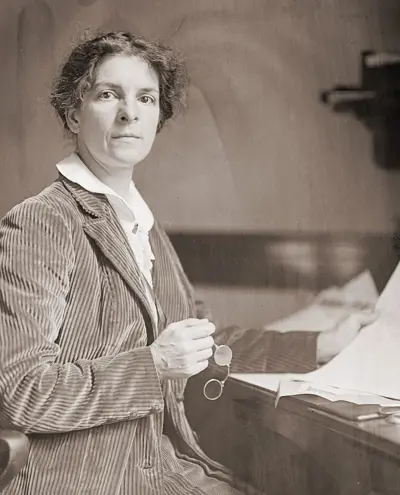
- Born: November 2, 1866
- Died: August 8, 1948
- Nationality: American
- Profession: Author, Journalist, Political Activist
Rheta Louise Childe Dorr (1868–1948) was an American journalist, suffragist newspaper editor, writer, and political activist. Dorr is best remembered as one of the leading female muckraking journalists of the Progressive era and as the first editor of the influential newspaper, The Suffragist.
