Joseph F. Guffey Quotes
It was a glorious day of triumph for the working people of this country when the odious decision of the Supreme Court forbidding the enactment of State minimum-wage laws for women was swept aside; and let me say that the man responsible for that great humane victory, singly and alone is President Franklin D. Roosevelt.
Joseph F. Guffey, 1870-1959, U. S. Senator (Democrat, PA), Senate speech supporting President Roosevelt's Supreme Court "packing" proposal, August 20, 1937
Sourced by: Eigen's Political and Historical Quotations


The feminists were split at the time over the issue of special protective labor laws for women which were different and more protective than those for men. The women received the added protection but the logic behind the lawmaking was that they were somehow less than the male workers and needed more protection. Between the 1920s and the 1960s, such labor laws for women were common, but they have mostly disappeared. See Bell-Richards {618512} for a succinct statement of the issue at the time.


After JFK’s assassination, many of his appointees who were liberal Democrats, were concerned that LBJ was a Southern conservative and might not want to serve in a conservative administration. Johnson satisfied Heller and all of the other Kennedy appointees who he asked to stay on. Actually, Johnson was more liberal than JFK, and proved it during his Presidency.


Mitchell was the first African American to be elected to the United States Congress as a Democrat. The few other Blacks were Republicans from the Reconstruction period after the Civil War. The President was FDR and Mitchell was elected in the midst of the Great Depression.


This was not one of Mazzini’s most popular ideas.


Labor reform was a burning issue in most of the industrialized countries of the world. The two areas that legislation was under consideration all over were working hours and child labor. There were no overtime provisions, employers were free to require workers to work 7 days for as many hours as they wanted. There were no limitations on the use of child labor. This is one of the classic conservative oppositions to these reforms. Ironically to us today, those against reform argued that it was disrespectful of the working man to take away his freedom to work whatever hours he so chose, and it was disrespectful of the workers role as a head of family to decide for him when and under what conditions his children could work. Germany at the time was a very dramatic example of the struggle as the Chancellor was opposed to all labor reform and Kaiser Wilhelm II felt that reforms were needed. The two most powerful Germans were split on this issue as were people in most countries.
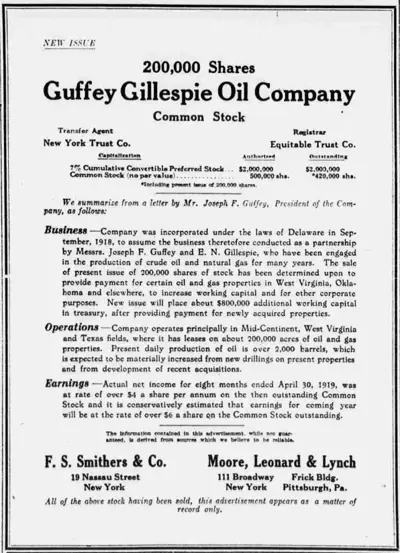
Joseph Finch "Joe" Guffey was an American business executive and Democratic Party politician from Pittsburgh, Pennsylvania. Elected from Pennsylvania to the United States Senate, he served two terms, from 1935 until 1947.
