Leo I Quotes
If a priest has given his daughter – to a man who had a concubine, it is not to be taken that he has given his daughter to a married man.
This edict illustrates the state of sexual mores in the 5th Century. Celibacy of priests was not then a requirement and many had children. One problem was that if a priest allowed his daughter to marry a man who lived with a concubine or mistress, the priest was accused of pandering his daughter and forcing her (the bride’ permission was not required then) to become an adulteress. However, almost all men of substance who would be good matches already had concubines. The pope’s edict was necessary in order for the daughters of priests to be married to suitable husbands.
Leo I, ~400–461, Roman Catholic Pope, Legal Edict
Sourced by: Eigen's Political and Historical Quotations

Many whites applauded his views when they corresponded to Christian mores of the time.


Note that the penalty for priests who married was not very great. By this Cannon, they would be forbidden to perform their priestly duties for a short while, and the marriage was dissolved, but they could maintain their rank, status and privileges although they could not advance further. This reflects the greater tolerance for marriage of the Eastern Church then the Westerners of Rome would allow. This grew to total acceptance of married priests in the Eastern Church but there were ideological differences when there was but one church.
Colton also ordered the Abbot to have no further mistresses. There was a basic concern about and prejudice against the Irish for their relatively promiscuous norms regarding sex. See {639438}.

This is one of the several examples of Biblical injuntions to burn transgressors at the stake. See Related Quotes for others. Both New and Old Testamant not only did not condemn this cruelty, but actually proscribed it. This was one of the reasons that it was so difficult for Christian nations to abolish the practice.


The secular government and the equal rights of women which transformed Turkey into a modern state under Ataturk had its roots with others in addition to Attaturk, Riza was the one who lead the parliament. Despite the Koran and Islamic tradition, polygamy was later abolished in Turkey—the first Islamic state to have done so since the founding of the religion.

Smith was the first Roman Catholic to run for President. He was very popular but there was a substantial amount of anti-Catholicism in America at the time. He lost, probably by the margin of the anti-Catholic vote.

This was a fairly radical constraint on what had been a traditional priestly prerogative throughout the ages. However, the penalty for such a sin and infraction was rather modest—a warning for the first offence, followed by reducing the cleric’s income. There were more serious punishments proscribed for repeated offenses, but typical of most reform efforts a newly prohibited activity carries a very light penalty. For example $20 fines for providing alcohol to a minor was the initial penalty in some states. A then current comparison can be made since elsewhere in this council dueling between Christians was also prohibited. But the penalty for even the first offence was excommunication.


This is a classic example of taking a principle and extrapolating it to an absurd degree. The Supreme Court did rule that there was a right to privacy and did rule that the state could not interfere with most consensual sex in the home including adultery. However the court did not permit bigamy or polygamy, sex with minors, and a host of other areas where the common weal is benefitted. Santorum and others with his view believe that the state should have the right to criminalize adultery and homosexual contact in a private home. And they indeed had this prerogative at earlier times. People were jailed for adultery in Virginia, for having intercourse in different positions in Alabama, for using condoms in Connecticut and others. However, most of the support for these sexual control laws came from religious fundamentalists who wanted the state to enforce their religious beliefs on all. That together with the privacy right, no longer allowed these state abuses if individual freedom. Ironically, most of the advocates for the state’s having the right to restrict sexual freedom. Think of themselves as advocates of individuality and the government not telling folks what to do or how to behave.

This editorial was an excellent summary of the issue of Mormon polygamy where both sides are described. The Thugs were a violent religious sect in India where females were forced into marriage.

This type of religious sexism is not unique to Islam. Fundamentalist Christians place women in a secondary role as do fundamentalist orthodox Jews although both allow a man to take only one wife. The Islamic scripture tells us that the Prophet allowed multiple wives only if the man had the resources to care for the wives and all the children. 4 is the maximum.

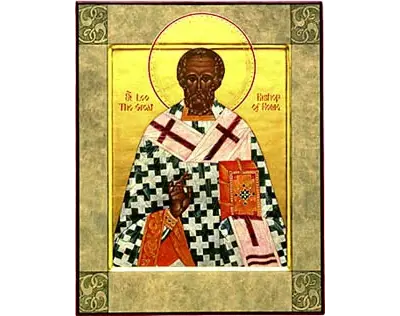
Leo I, also known as Leo the Great, was Bishop of Rome from 29 September 440 until his death. Pope Benedict XVI said that Leo's papacy "was undoubtedly one of the most important in the Church's history."
