Quinisext Council Quotes
… those who have been married to one wife, if she was a widow, and likewise those who after their ordination have unlawfully entered into one marriage that is, presbyters, and deacons, and subdeacons, being debarred for some short time from sacred ministration, and censured, shall be restored again to their proper rank, never advancing to any further rank, their unlawful marriage being openly dissolved.
Note that the penalty for priests who married was not very great. By this Cannon, they would be forbidden to perform their priestly duties for a short while, and the marriage was dissolved, but they could maintain their rank, status and privileges although they could not advance further. This reflects the greater tolerance for marriage of the Eastern Church then the Westerners of Rome would allow. This grew to total acceptance of married priests in the Eastern Church but there were ideological differences when there was but one church.
Council In Trullo, Roman Catholic Council of Bishops Called By Emperor Justinian II, Canon III, Constantinople, 692
Sourced by: Eigen's Political and Historical Quotations

This was a fairly radical constraint on what had been a traditional priestly prerogative throughout the ages. However, the penalty for such a sin and infraction was rather modest—a warning for the first offence, followed by reducing the cleric’s income. There were more serious punishments proscribed for repeated offenses, but typical of most reform efforts a newly prohibited activity carries a very light penalty. For example $20 fines for providing alcohol to a minor was the initial penalty in some states. A then current comparison can be made since elsewhere in this council dueling between Christians was also prohibited. But the penalty for even the first offence was excommunication.

Naples was an independent kingdom before the unification of Italy. This quotation illustrates one of the lowest periods of the Roman Catholic Church where the personal morality of the Pope and Cardinals was greatly at odds with the earlier and current positions of the Church. This hypocrisy, nepotism, and corruption was one of the major factors that led to the Reformation. Note that the Pope had an illegitimate son who he named a Cardinal and the Pope wanted his son to marry the daughter of the king. The king was not enthusiastic given the son’s status as a Cardinal of the Church.

This edict illustrates the state of sexual mores in the 5th Century. Celibacy of priests was not then a requirement and many had children. One problem was that if a priest allowed his daughter to marry a man who lived with a concubine or mistress, the priest was accused of pandering his daughter and forcing her (the bride’ permission was not required then) to become an adulteress. However, almost all men of substance who would be good matches already had concubines. The pope’s edict was necessary in order for the daughters of priests to be married to suitable husbands.


The struggle in the Catholic Church reached an amazing state. Just after a new pope, Martin V, had been elected the Council of Bishops at Constance came up with this notion which placed their views above those of the Pope under the theory that this particular council derived its power and authority directly from Christ while the pope was only God’s “vicar on earth.” The struggle was somewhat akin to the inevitable struggle for power between an executive branch and a legislative branch. The Council’s ascendancy didn’t last very long and was repudiated by successive popes.

Many whites applauded his views when they corresponded to Christian mores of the time.
His quotations are very important because he wrote many of the Islamic legal opinions that governed Muslim Spain and influenced the Arabs of North Africa. There are many in the modern world who tend to agree with this view of priestly celabicy especially in the light of the Roman Catholic Sex Scandals involving priests throughout the world of the beginning of the 21st century.

The problem priests who sexually prey on young boys is not a modern problem only. This quotation demonstrates that the problem has existed for over 1000 years and probably existed in the earliest days of Christianity. This has been a problem of many clergies of different religions. However, the Roman Catholic authorities of the day seemed to be more proactive in dealing with it than in the scandals of the end of the 20th century and the beginning of the 21st.

King Henry VIII had left the Roman Catholic church and taken England and Ireland out also. He replaced the Pope as the head of the English and Irish churches. There was much opposition in Ireland and the priests were the most assertive opponents to the change and were still loyal to the Pope. Queen Elizabeth continued to have problems with the Priests. James I, Elizabeth’s successor, became fed up by the Roman Catholic Priests and therefor issued this Proclamation.


Mohamed preached to a simple people and he made analogies that would be understood. Heaven is often depicted as a succulent garden. In this saying women who want to divorce their husbands without sufficient Islamic cause would not go to heaven. This manifests into a strong sexist culture with regard to Islamic marriage rules. This particular passage is not per se a problem; however, there is no parallel stricture on men who under Sharia, Islamic law, can divorce a wife without even going to a court and without ever giving a reason.


At the time there was no pope. Before an election for one was held, all the electors made the collective oath and promise to maintain the idea of a council of clerics if he were elected Pope. After the Pope was elected, the bishops solidified their power even claiming ascendancy and authority, when assembled, over the Pope. See the Council of Constance {610980} 6 years later.
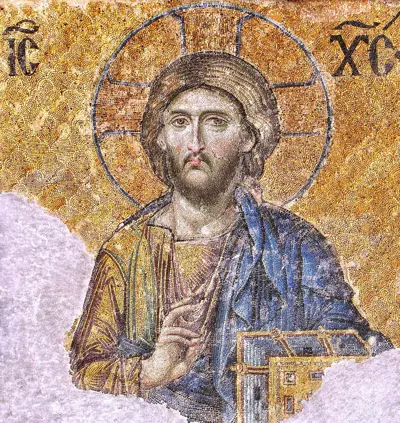
The Quinisext Council, i.e. the Fifth-Sixth Council, often called the Council in Trullo, Trullan Council, or the Penthekte Synod, was a church council held in 692 at Constantinople under Justinian II. It is known as the "Council in Trullo" because, like the Sixth Ecumenical Council, it was held in a domed hall in the Imperial Palace (τρούλος [troulos] meaning a cup or dome). Both the Fifth and the Sixth Ecumenical Councils had omitted to draw up disciplinary canons, and as this council was intended to complete both in this respect, it took the name of Quinisext. It was attended by 215 bishops, mostly from the Eastern Roman Empire. Basil of Gortyna in Crete belonged to the Roman patriarchate and called himself papal legate, though no evidence is extant of his right to use that title.
