COUNCIL OF PISA
At the time there was no pope. Before an election for one was held, all the electors made the collective oath and promise to maintain the idea of a council of clerics if he were elected Pope. After the Pope was elected, the bishops solidified their power even claiming ascendancy and authority, when assembled, over the Pope. See the Council of Constance {610980} 6 years later.
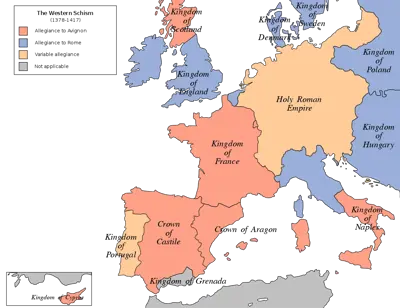
The Council of Pisa was a controversial ecumenical council of the Catholic Church held in 1409. It attempted to end the Western Schism by deposing Benedict XIII (Avignon) and Gregory XII (Rome) for schism and manifest heresy. The College of Cardinals, composed of members of both the Avignon Obedience and the Roman Obedience, who were recognized by each other and by the Council, then elected a third papal claimant, Alexander V, who lived only a few months. He was succeeded by John XXIII.
